
Copper thieving is the process of adding small, electrically isolated copper features to unused areas of a PCB. These non-functional patterns balance copper distribution and minimize the risk of board warpage.
Circuit board designers should be aware of copper thieving, as it is one of the key manufacturability aspects evaluated during CAM review.
In this article, you’ll learn how thieving improves the lamination quality, where fabricators apply it, the common patterns they use, and what designers should include in the fabrication notes.
Highlights:
- Copper thieving promotes uniform resin flow and helps prevent voids and weak interlayer bonding.
- Manufacturers use different thieving structures such as dots, mesh, and grids.
- Specify where thieving is required and restricted in the fab notes.
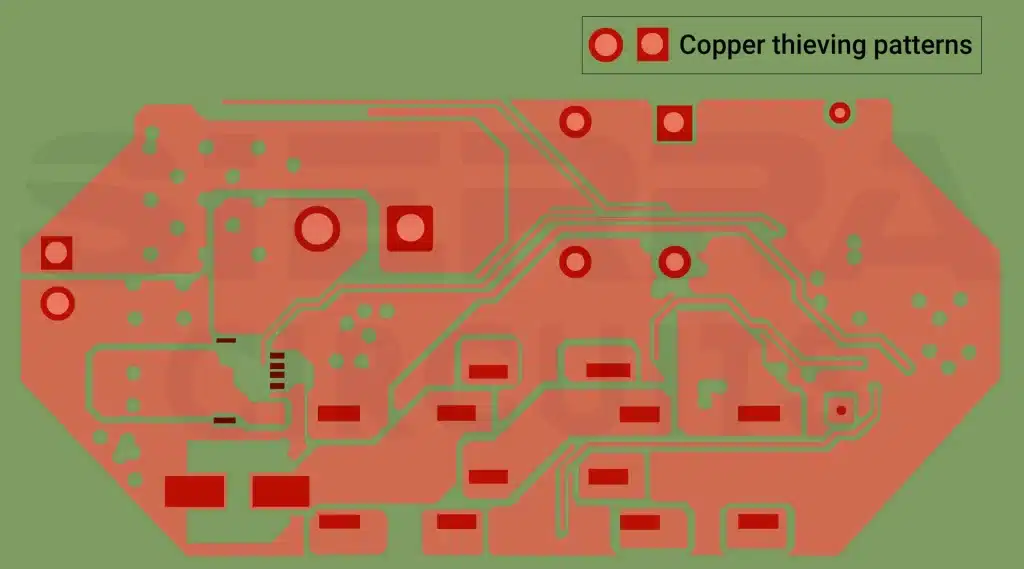
What’s the purpose of copper thieving?
Manufacturers implement this technique to balance copper distribution in a PCB. Adding these non-functional features to sparse regions improves lamination stability and reduces defects caused by uneven resin flow, thermal imbalance, and internal stress.
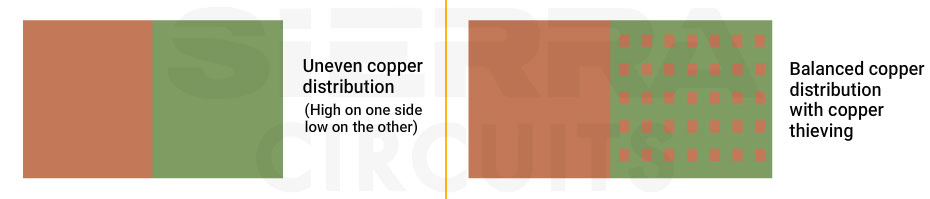
Here’s how it improves the fabrication quality:
1. Controls resin flow
During lamination, resin must flow evenly between layers. In areas with low copper density, excess resin can accumulate and create manufacturing defects. Copper thieving introduces non-functional features in these regions to achieve more uniform resin flow.
This reduces the risk of:
- Resin starvation
- Voids between layers
- Weak interlayer bonding
2. Maintains thermal balance and reduces internal stress
Copper and resin respond differently to heat and pressure during lamination. Uneven copper distribution causes differences in heating, cooling, and compression, creating mechanical stress within the circuit board stack-up. This can weaken layer bonding and impact the board quality. Thieving patterns help distribute heat more evenly across the layer, improving lamination stability.
3. Reduces the risk of warpage
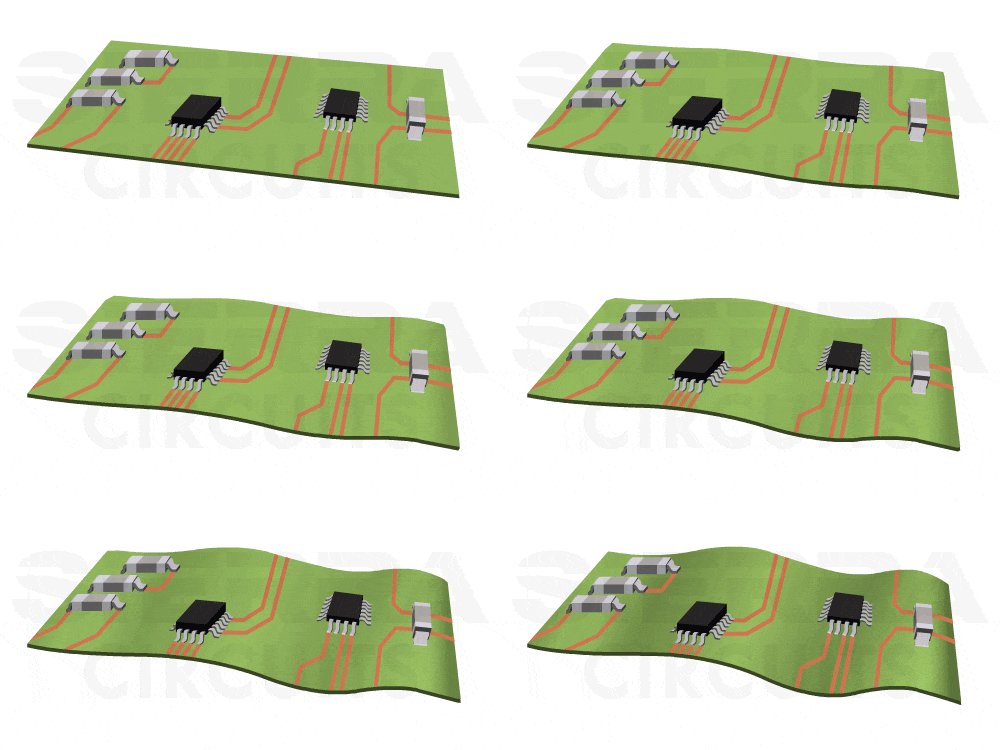
Uneven copper distribution can cause different regions of the printed board to expand and contract at different rates during lamination and cooling. This can cause the board to bend or twist.
Thieving improves board stability and reduces the risk of warpage during and after lamination.
For more, see balanced copper distribution and copper weight in PCBs.
Where do fabricators include thieving patterns?
Circuit board manufacturers add thieving patterns to low-copper-density and unused areas on the inner and outer layers of multilayer circuit boards during panelization.
On inner layers, it promotes uniform resin flow, reduces air entrapment, and improves heat distribution across the panel.
On outer layers, it distributes the current density evenly, avoiding high-density current areas.
CAM engineers usually determine the placement and pattern of copper thieving based on the board’s copper distribution and lamination requirements. However, designers can also specify their requirements in the fab notes. We have covered this in the upcoming sections.
If you need more details on thieving, book a meeting to talk to a PCB expert or call us at +1(800) 763-7503.
What are the commonly used copper thieving patterns?
There are typically three features.
- Dot
- Grid or mesh structures
- Solid copper with openings (cross-hatch), often used in flex circuit boards for stress relief
Each pattern helps in a different way. For example, some structures help control resin flow, while others improve heat spread or reduce stress. The pattern you choose depends on the material, board thickness, and lamination requirements.
The table below shows the different thieving patterns and their use cases.
| Copper thieving pattern | Illustrations | Use cases |
|---|---|---|
| Dot | 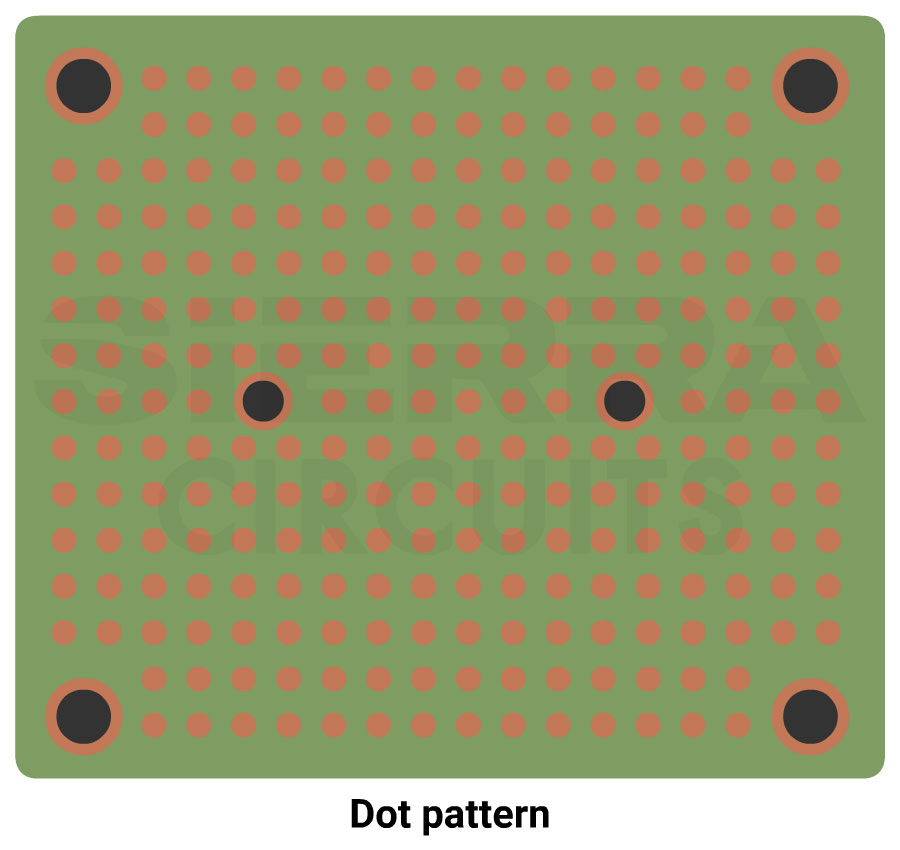 |
Moderate copper balancing and resin flow control are required during lamination. |
| Grid/mesh | 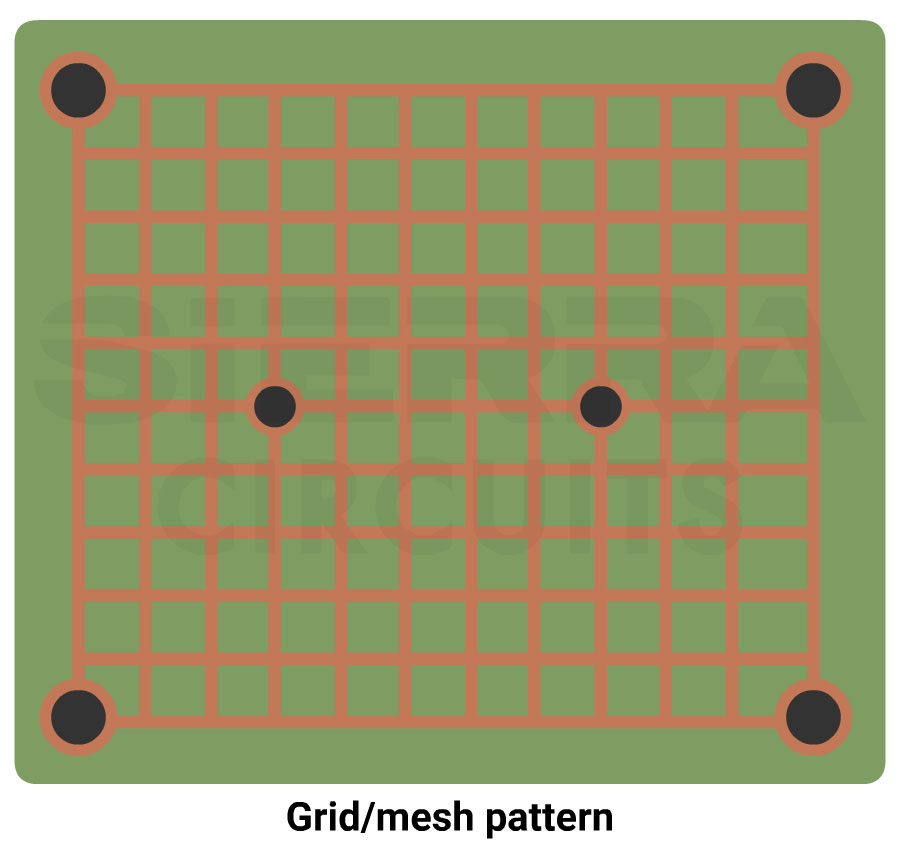 |
Improved resin flow, air release, and heat distribution across the panel are needed. |
| Solid copper with openings/cross-hatched | 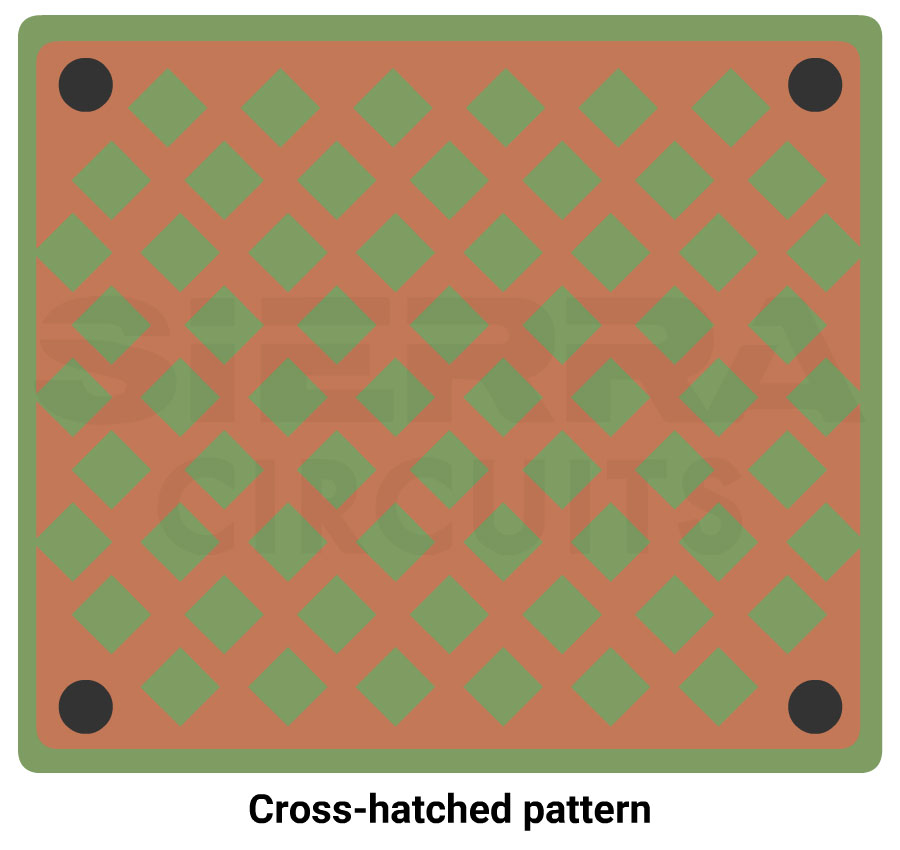 |
Copper balancing is required to reduce mechanical stress. Typically used in flex PCBs. |
Sierra Circuits fabricates and assembles high-performance flex and rigid-flex boards suitable for harsh operating environments and emerging applications such as wearable electronics.
To learn more, see flex and rigid-flex PCB capabilities.
What should designers include in the fab notes about copper thieving?
Add these details to your fab drawing:
- Layers and regions that require copper thieving.
- Areas where isolated copper is restricted.
- Preferred thieving patterns, if applicable.
Copper thieving is an important manufacturability consideration that requires early collaboration between PCB designers and fabricators. Understanding its role and specifying requirements upfront can help you avoid manufacturing defects.
For more, download the PCB Fab and Assembly Notes for Designers.

PCB Fab and Assembly Notes for Designers
8 Chapters - 72 Pages - 70 Minute ReadWhat's Inside:
- Guidance on how to write comprehensive fab documentation
- Advanced fabrication notes for flex, rigid-flex, and hybrid stack-ups
- Difference between fabrication and assembly notes
- Assembly documentation essentials: BOM, X-Y data, and drawings