



Contents

On-demand webinar
How Good is My Shield? An Introduction to Transfer Impedance and Shielding Effectiveness
by Karen Burnham
Electric vehicles (EVs) use HDI, heavy copper, and insulated metal substrate (IMS) PCBs to support core operations such as battery management and power conversion.
Designing these boards presents challenges such as managing thermal stress generated by high-power circuits and minimizing EMI caused by switching systems.
In this article, you’ll learn about the different types of printed boards used in EV subsystems, the common challenges involved in designing them, and the solutions to overcome these issues.
Highlights:
- EV power electronics widely utilize heavy copper PCBs to enable high-current handling and reliable operation in traction inverters, DC-DC converters, and battery management systems (BMS).
- High-Tg FR-4 materials provide thermal stability for power and control circuits, while low-loss PTFE laminates support high-frequency signal integrity in radar, V2X, and automotive Ethernet applications.
- Communication protocols such as CAN FD, automotive Ethernet, LIN, SPI, and V2X enable real-time data exchange across EV electronic systems.
- Automotive assemblies must comply with standards such as IPC-A-610, ISO 26262, and AEC-Q100.
Why do EVs require advanced circuit board technologies?
Electronics in conventional ICE vehicles are primarily used for functions such as infotainment, lighting, and engine control. EVs rely on PCB-based systems for core operations, including battery management, power conversion, motor control, thermal management, regenerative braking, ADAS, and vehicle-to-system communication.
These applications require circuit boards that withstand high voltages and currents, support high-speed data transfer, and dissipate significant heat without compromising reliability. To meet these demands, EV manufacturers leverage advanced technologies such as HDI, heavy copper, metal-core, high-Tg, and multilayer boards throughout the vehicle’s architecture.
What types of PCBs are used in electric vehicle subsystems?
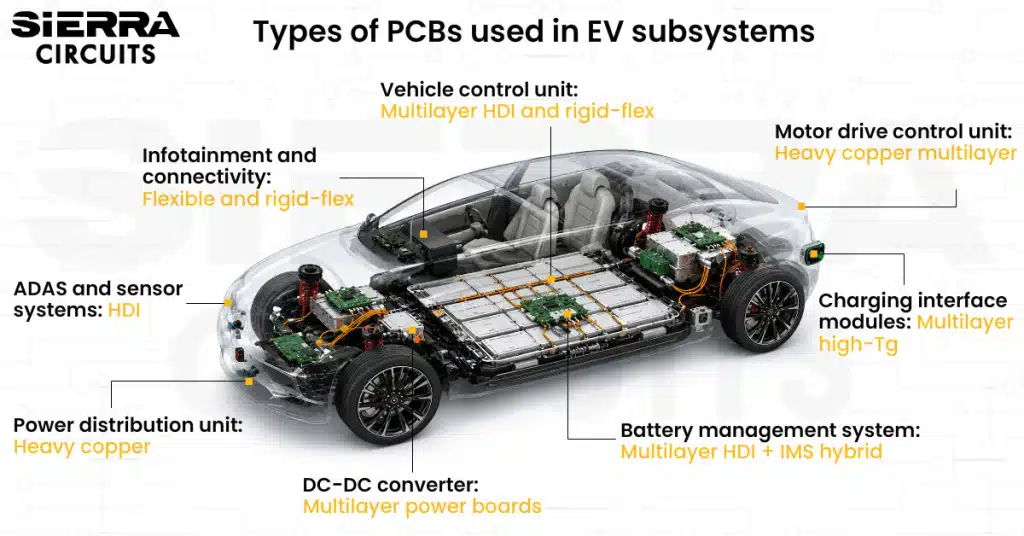
EV systems use multilayer HDI boards, IMS, metal-core PCBs (MCPCBs), heavy-copper designs, and flexible circuits, based on their electrical, thermal, and packaging requirements.
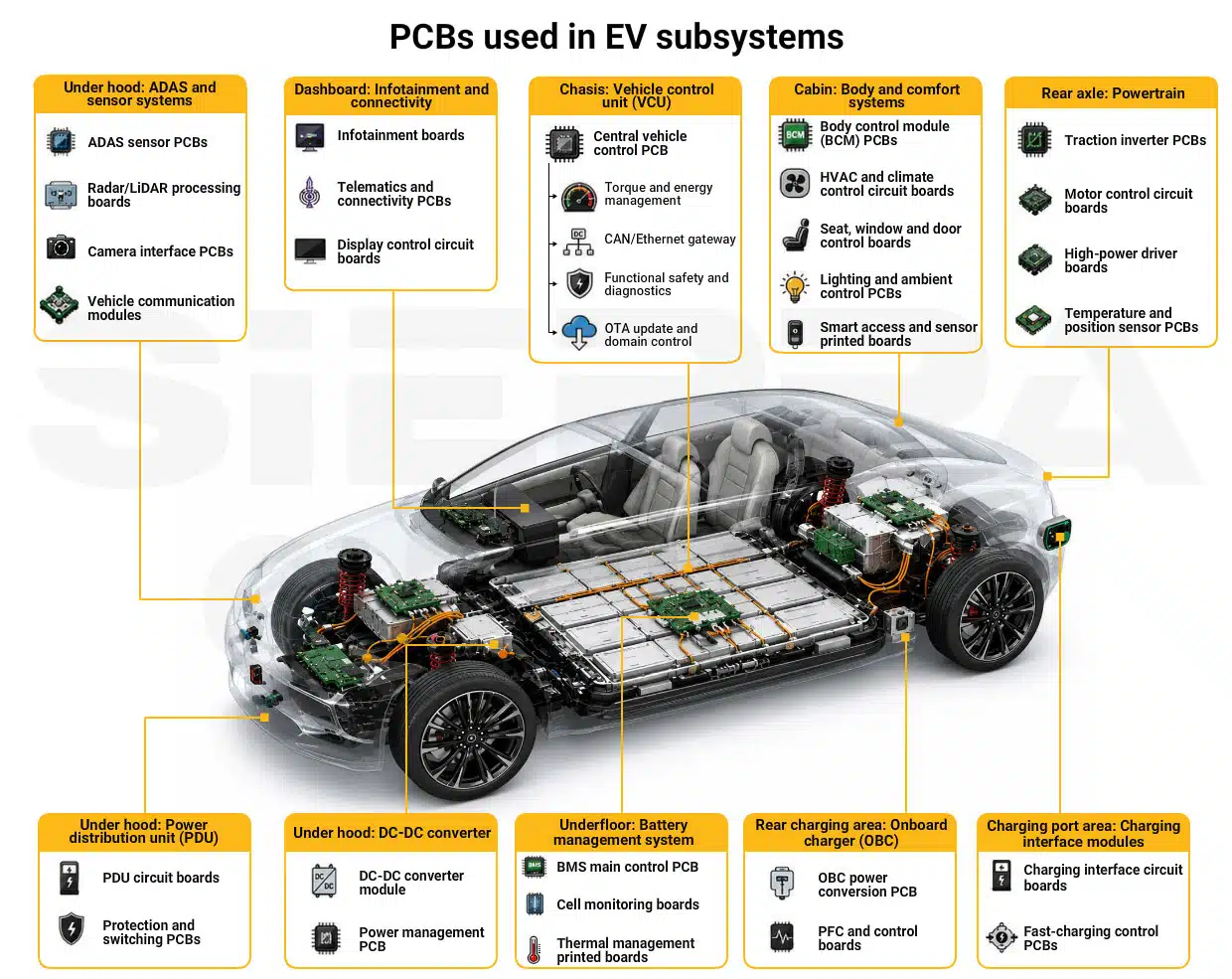
The table below lists the types of boards used in the various subsystems of an electric vehicle.
| EV subsystem | Function | Key components | PCB type and benefits |
|---|---|---|---|
| Battery management system | Monitors battery health, charging, balancing, and thermal safety | Cell monitoring ICs, voltage/current sensors, thermal sensors, protection circuits | Multilayer HDI +IMS hybrid: Supports dense sensing circuits, high-voltage isolation, excellent thermal management, and compact integration inside the battery pack |
| Traction inverter | Converts DC battery power into AC motor power | IGBTs/SiC MOSFETs, gate drivers, capacitors, current sensors | IMS: Provides superior thermal dissipation and high-current handling for power electronics |
| Motor drive control unit | Controls motor speed, torque delivery, and regenerative braking | Microcontrollers, gate drivers, encoder interfaces, power modules | Heavy copper multilayer: Improves current-carrying capacity, power integrity, and thermal reliability |
| DC-DC converter | Regulates the voltage between the high-voltage and low-voltage subsystems | Switching regulators, inductors, transformers, MOSFETs | Multilayer power board: Optimized for EMI suppression, efficient thermal performance, and voltage regulation |
| Power distribution unit (PDU) | Distributes electrical power across vehicle subsystems | Fuses, relays, busbars, protection circuits | Heavy copper: Supports high-current distribution and electrical fault protection |
| ADAS and sensor systems | Enables autonomous driving and driver-assistance functions | Radar modules, LiDAR, cameras, sensor fusion processors | HDI: Allows high-speed signal routing, miniaturization, and low-latency data processing |
| Vehicle control unit (VCU) | Coordinates vehicle-wide control, diagnostics, energy management, and over-the-air (OTA) software updates | Central processors, gateway controllers, safety MCUs, communication interfaces | Multilayer HDI and rigid-flex: Facilitate centralized processing, dense interconnects, reliable communication, and compact domain-controller architectures |
| Vehicle communication systems | Enables vehicle-wide data communication, gateway control, and V2X networking | CAN/CAN FD controllers, automotive Ethernet modules, RF modules | High-speed multilayer: Ensures EMC and reliable differential-pair routing |
| Infotainment and connectivity | Supports displays, navigation, telematics, and wireless communication | Display processors, GPS modules, wireless chipsets, audio ICs | Flexible and rigid-flex: Enable compact packaging and lightweight integration in space-constrained interiors |
| Body and comfort systems | Control cabin electronics and passenger comfort features | HVAC controllers, seat modules, lighting controllers, smart access systems | Flexible and rigid-flex: Reduce wiring complexity and support compact distributed electronics throughout the vehicle cabin |
| Onboard charger (OBC) | Converts AC charging input into regulated DC battery charging and performs power factor correction (PFC) | Power converters, EMI filters, PFC circuits, transformers, control ICs | Multilayer (high-Tg) with thick copper or IMS: Handles high thermal stress, voltage isolation, fast-switching, and high power density |
| Charging interface modules | Manages charging-port communication and fast-charging protocols | Charging controllers, communication ICs, isolation circuits | Multilayer (high-Tg): Supports fast charging, high-voltage isolation, and withstands harsh environmental conditions |
Sierra Circuits fabricates and assembles high-quality HDI and flex PCBs that can withstand harsh EV operating environments.
For more details, talk to a PCB expert: Book a meeting or call us at +1 (800) 763-7503.
EV subsystems and communication protocols
Protocols such as CAN/CAN FD, automotive Ethernet, LIN, SPI, I2C, and high-speed sensor interfaces enable modern electric vehicle subsystems to exchange real-time data for power management, sensing, safety, infotainment, and charging operations.
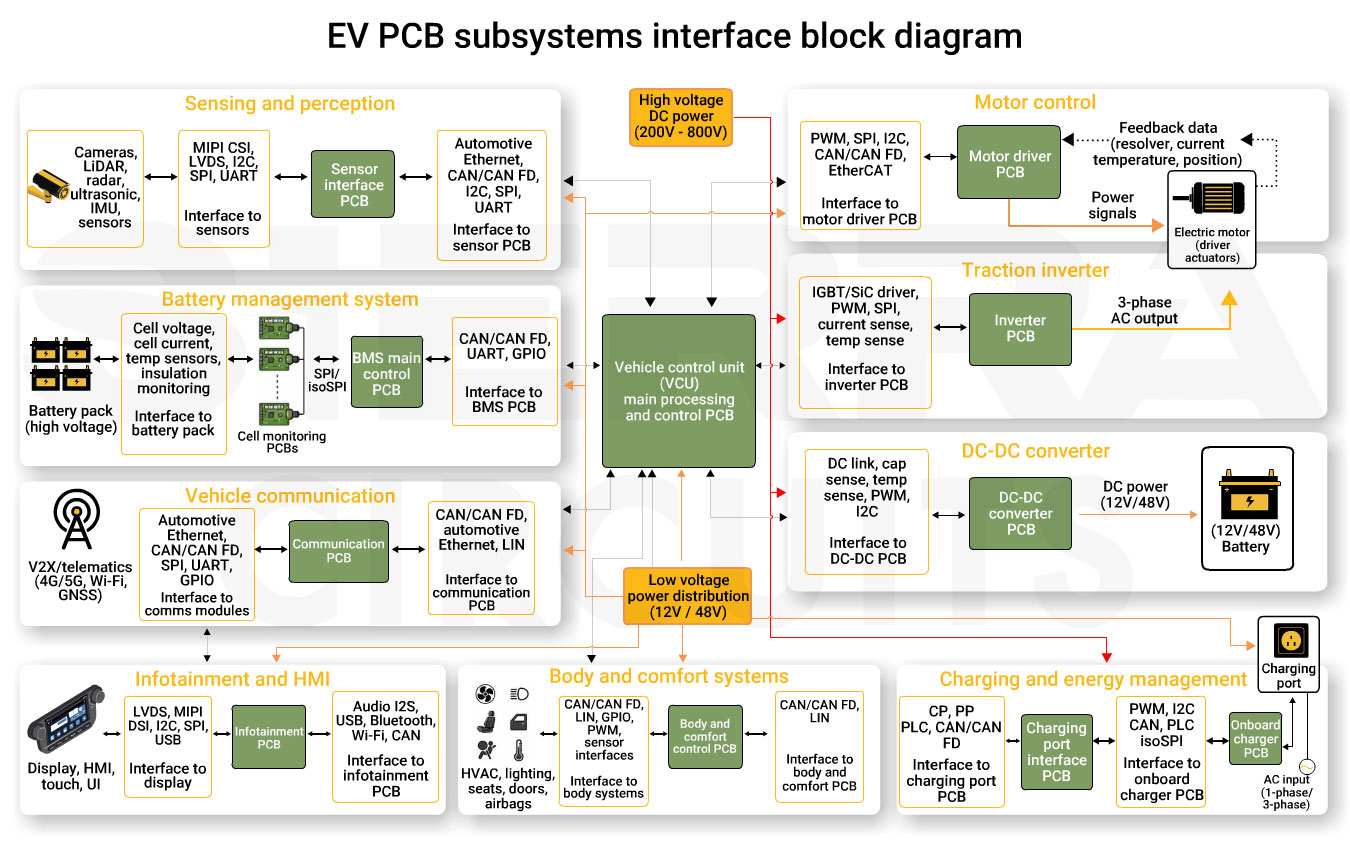
The table below highlights how different EV electronic domains interact.
| EV subsystem | Connected components | Interfaces, signaling, and communication protocols |
|---|---|---|
| Sensing and perception | Cameras, LiDAR, radar, ultrasonic sensors, IMU sensors, sensor fusion PCB, VCU | MIPI CSI, LVDS, I2C, SPI, UART, automotive Ethernet, CAN/ CAN FD |
| Motor control | Motor driver board, electric motor, resolver, feedback sensors, VCU | PWM, SPI, I2C, CAN/CAN FD, EtherCAT |
| Battery management system | Battery pack, cell monitoring printed board, VCU, insulation monitoring circuits | CAN/CAN FD, SPI, UART, GPIO, isoSPI, cell sensing (voltage/current/temperature) |
| Traction inverter | Inverter PCB, electric motor, HV battery, VCU | IGBT/SiC gate-driver interfaces, PWM, SPI, current sensing, temperature sensing |
| Vehicle communication | V2X modules, telematics units, global navigation satellite system (GNSS) modules, electronic control units (ECUs), VCU | CAN/CAN FD, SPI, UART, GPIO, automotive Ethernet, LIN |
| Infotainment and human-machine interface (HMI) | Displays, touchscreen UI, GPS, Wi-Fi, Bluetooth, and infotainment boards | LVDS, MIPI DSI, I2C, SPI, USB, Audio I2S, CAN/CAN FD, Wi-Fi, Bluetooth |
| Body and comfort systems | Climate control, lighting, seat control, door/window modules, airbag/safety systems, VCU | CAN/LIN, GPIO, PWM, sensor interfaces |
| DC-DC converter | HV battery, 12V/48V battery, LV power distribution, VCU | PWM, I2C, DC-link voltage sensing, capacitor sensing, temperature sensing |
| Charging and energy management | Charging port, onboard charger circuit board, BMS, HV battery, VCU | Control pilot (CP), proximity pilot (PP), PLC, CAN/CAN FD, PWM, I2C, isoSPI |
| Vehicle control unit | All major EV subsystems, powertrain control, and communication backbone | CAN/CAN FD, automotive Ethernet, LIN, SPI, UART, GPIO |
| High-voltage power distribution | Battery pack, inverter, OBC, DC-DC converter | High-voltage DC bus (200V-800V), protection and isolation monitoring |
| Low-voltage power distribution | VCU, ECUs, infotainment, body electronics, sensors, and actuators | 12V/48V DC power distribution, CAN/LIN control signaling |
To learn how to design circuit boards for high-load applications, download the High-Power PCB Design Guide.
High-Power PCB Design Guide
12 Chapters - 96 Pages - 75 Minute ReadWhat's Inside:
- Guidelines for designing traces, planes, and vias for high current
- Material selection, stack-up, and power distribution strategies
- Thermal management techniques for power electronics
- Creepage and clearance rules based on the industry standards
- Common design mistakes and how to avoid them
Download Now
What is the role of flex and rigid-flex printed circuits in EVs?
In addition to conventional rigid architectures, modern EVs increasingly rely on flexible and rigid-flex PCBs for compact subsystem integration, reduced wiring complexity, improved packaging efficiency, reduced vehicle weight, better vibration resistance, and design flexibility.
Flexible PCB technologies are commonly used in:
- The battery management system interconnects
- ADAS sensor modules
- Camera and radar systems
- Infotainment and display systems
- Vehicle communication modules
- Compact dashboard power electronics assemblies
- Sensor arrays
For flex layout strategies, flex PCB design guidelines: optimizing layout for manufacturing.
Benefits of using flex boards in EVs:
- Compared to traditional wiring harnesses, flexible circuits can reduce harness weight by 60–75%. Reducing wiring weight directly improves energy efficiency, driving range, and packaging density.
- They can also bend and fold around compact vehicle structures, making them ideal for space-constrained EV architectures.
- Flex boards commonly use polyimide substrates capable of operating between -40°C and 165°C while maintaining excellent mechanical durability under harsh environments.
- Automotive flex circuits can survive more than 100,000 bend cycles and withstand severe vibration environments.
- To ensure long-term reliability, automotive PCB assemblies undergo:
- Thermal cycling tests
- Thermal shock tests
- Temperature-humidity bias tests
- Communication modules in rigid-flex architectures also reduce connector count, minimizing potential failure points.
Sierra Circuits fabricates and assembles high-performance flex PCBs engineered to withstand harsh environments and support dynamic applications.
For more details, see flex and rigid-flex PCB capabilities.
What’s the purpose of PCBs in EV battery management systems?
PCBs enable battery monitoring, protection, balancing, communication, and control functions required for battery management systems.
BMSs are among the most critical electronic subsystems in electric vehicles because they ensure battery safety, performance, thermal stability, and charging reliability.
BMS boards integrate sensing, protection, communication, and control functions while operating under high-voltage, high-current, and thermally demanding conditions. As a result, PCB design for BMS applications requires careful attention to signal integrity, thermal management, isolation, and functional safety.
| BMS functions | Operational purpose | PCB design requirements |
|---|---|---|
| Cell voltage monitoring | Detect overvoltage, undervoltage, and cell imbalance conditions | High-accuracy sensing circuits, low-noise analog routing |
| Thermal monitoring and regulation | Prevent thermal runaway during charging and discharge cycles | Thermal vias, heat dissipation design, sensor integration |
| Cell balancing | Equalize charge distribution across battery cells | Efficient power management topology, switching reliability |
| Current monitoring and protection | Detect overcurrent and short-circuit conditions | Heavy-copper traces, high-current handling capability |
| State-of-charge (SoC) estimation | Calculate remaining battery capacity and range prediction | Embedded processing reliability, real-time data acquisition |
| Vehicle communication interfaces | Exchange data with motor controllers, chargers, and vehicle ECUs | CAN/CAN FD routing, EMC compliance, signal integrity |
| Emergency shutdown and isolation | Disconnect faulty battery sections during critical failures | Functional safety redundancy, high-voltage isolation design |
Modern battery management systems typically use a distributed architecture consisting of slave cell-monitoring boards, a master BMS controller board, and power-management boards.
Slave boards handle cell voltage monitoring, temperature sensing, and balancing functions at the module level. The master BMS board performs system-level processing, state estimation, communication, and safety management.
Protection boards manage current sensing, contactor control, emergency shutdown, and high-voltage isolation functions.
Electric vehicles PCB market insight
The EV circuit board market is growing steadily due to increasing demand for electric vehicles, BMS, advanced driver assistance systems (ADAS), power electronics, infotainment devices, and vehicle control modules.
As EV electronics become more complex and safety-critical, automotive OEMs are placing greater emphasis on manufacturing reliability, inspection visibility, and traceability requirements.
Global EV PCB market size
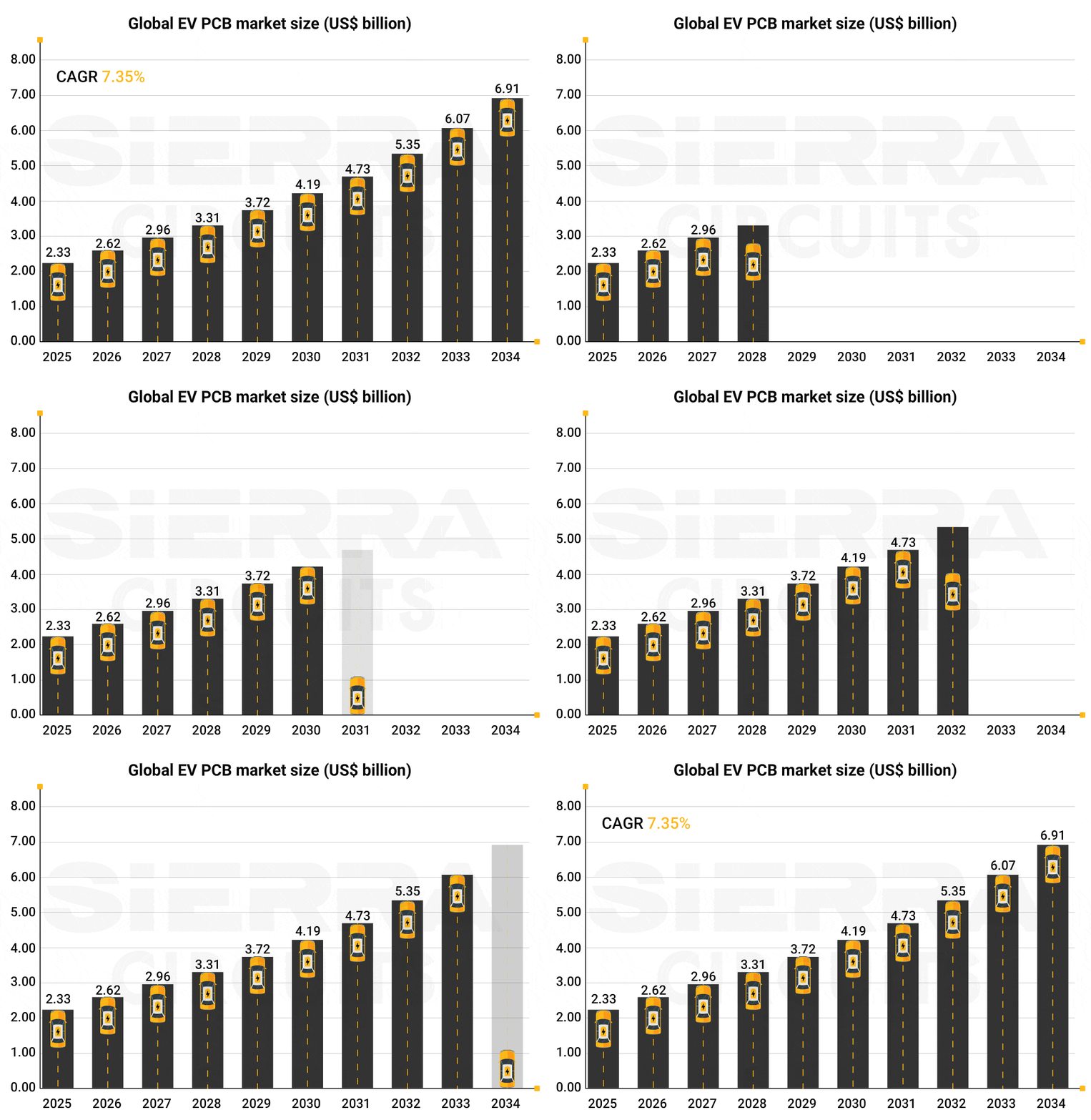
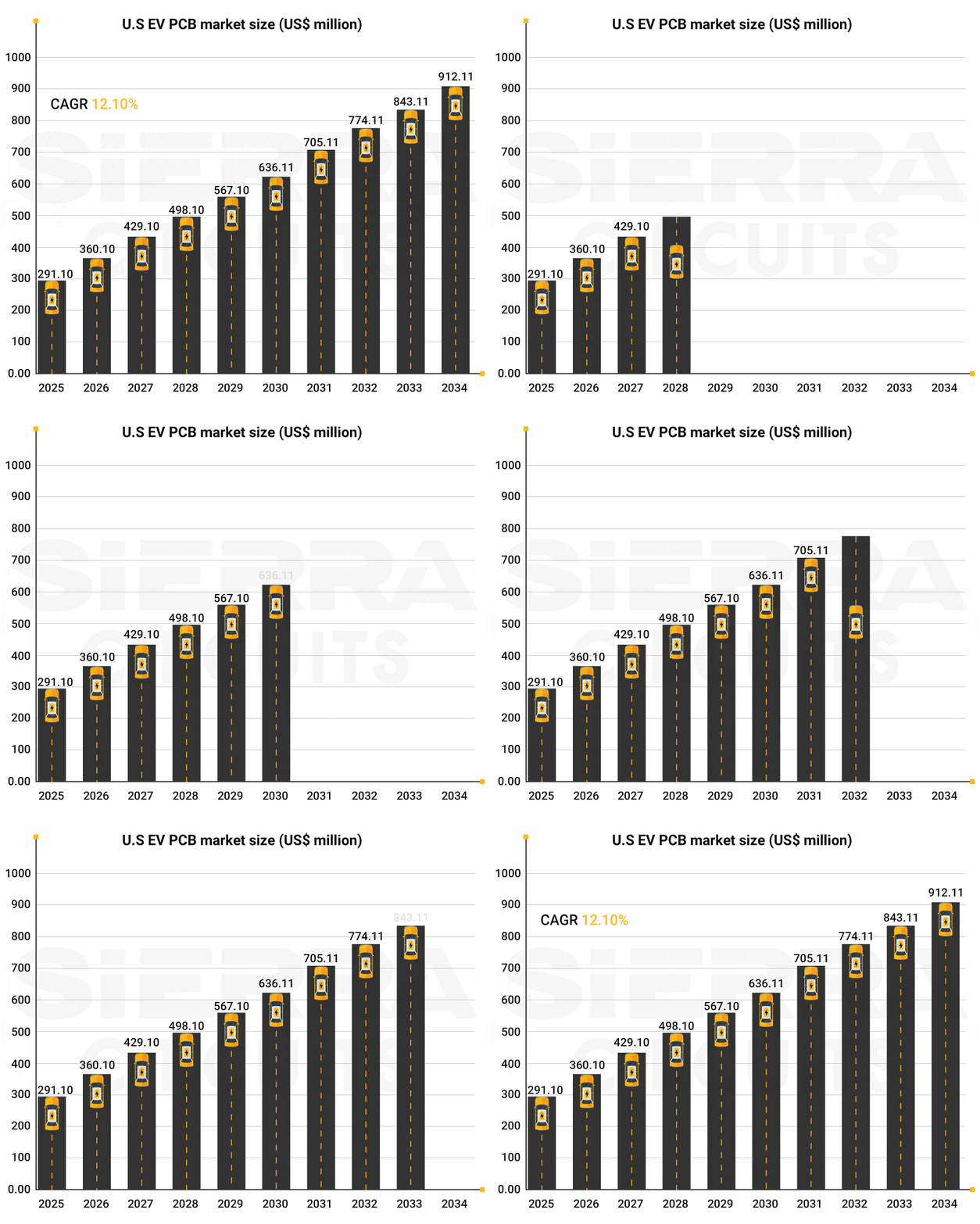
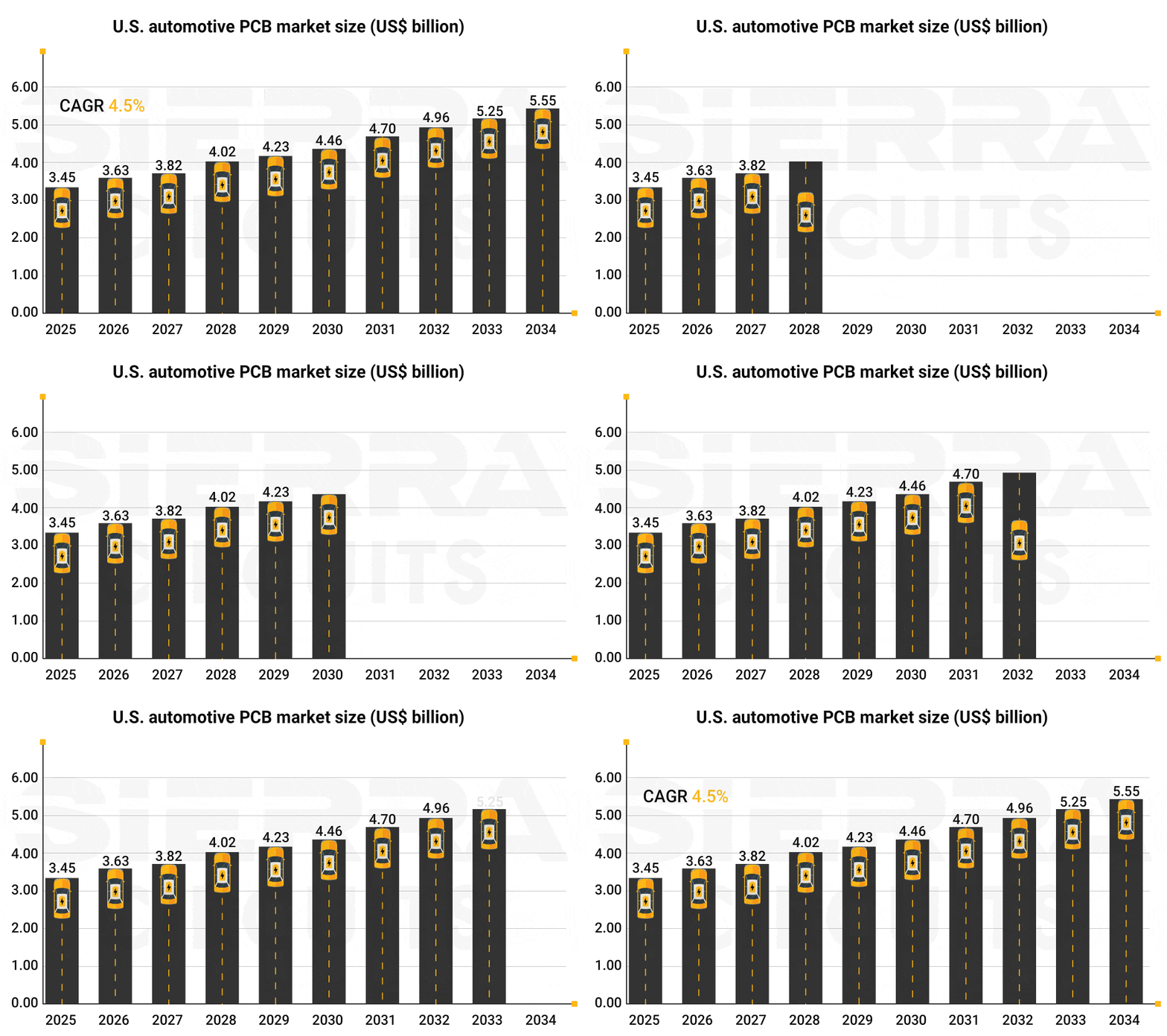
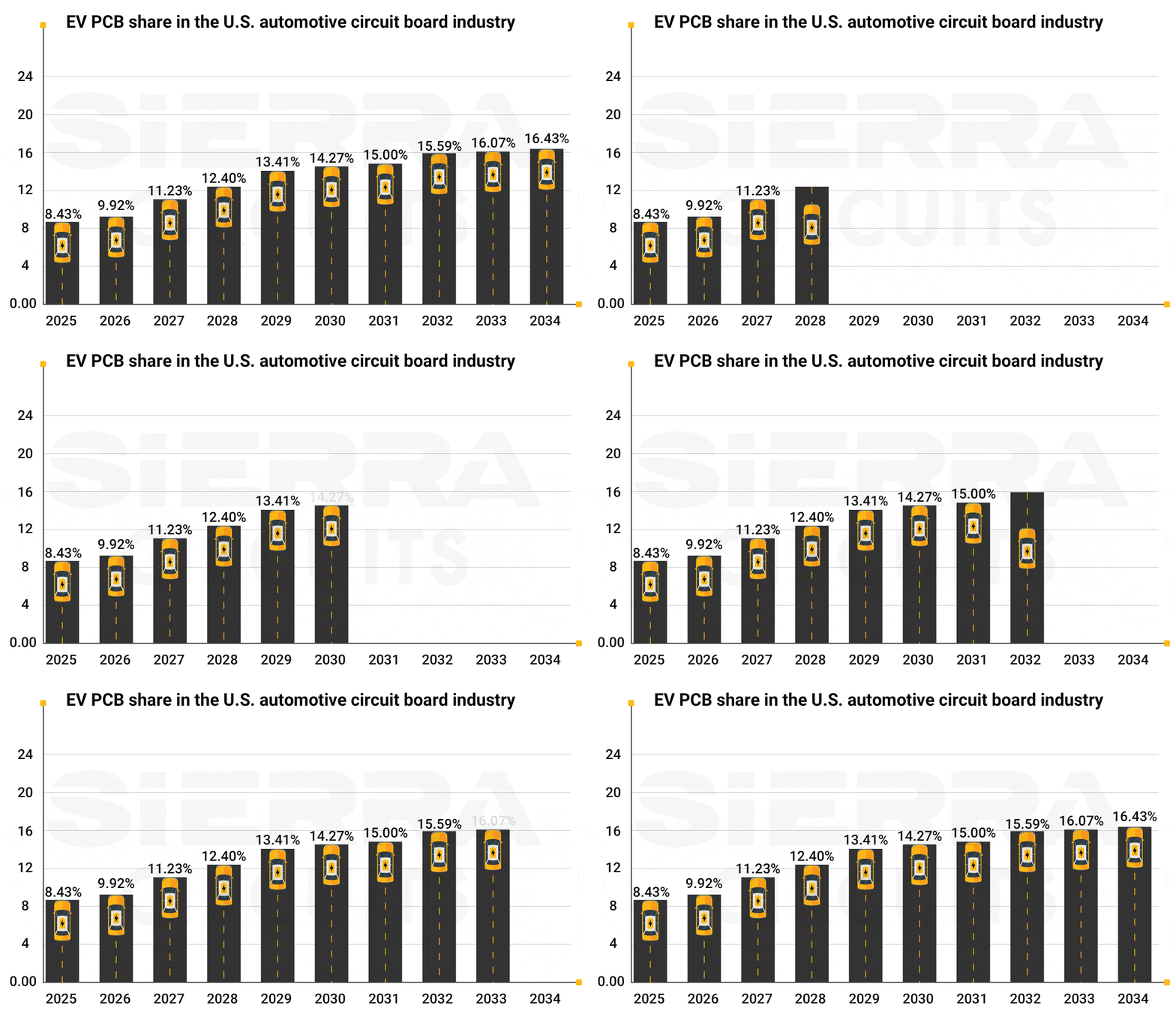
The global electric vehicle circuit board market is valued at USD 2.62 billion in 2026 and is expected to reach USD 6.91 billion by 2034, growing at an estimated CAGR of 7.35%. The market is also projected to witness an average annual growth rate of approximately 12%.
According to the Global EV Outlook 2026, the electric vehicle market reached new highs in 2025, with global EV sales increasing by 20% compared with 2024, with 20 million more units sold.
China continues to remain the largest contributor to EV demand and production globally. Europe also experienced significant growth following stricter EU CO₂ regulations, with sales rising by approximately 30% in 2025, with 4 million more units sold.
What kind of dielectric materials and construction technologies are used in EVs?
EV systems require advanced board materials such as high-Tg FR4 and low-loss PTFE. These laminates offer superior thermal stability, electrical insulation, and signal integrity.
Further, advanced construction technologies such as heavy copper structures, thermal inlays, and hybrid power-control PCB architectures are used to improve heat dissipation and high-current handling in modern electric vehicles.
Advanced laminates for electric vehicle applications
The following substrates are widely used across modern EV electronic systems:
| PCB material | Thermal conductivity (W/m·K) | Key characteristics | Typical EV applications |
|---|---|---|---|
| High-Tg FR4 laminates | ~0.3-0.5 |
|
|
| Low-loss PTFE | ~0.2-0.6 |
|
|
| Hydrocarbon-ceramic | ~0.5-0.9 |
|
|
| Polyimide rigid | ~0.2-0.5 |
|
|
| Polyimide flex | ~0.16-0.30 |
|
|
Beyond thermal conductivity, EV PCB materials must also withstand repeated thermal cycling, vibration, humidity exposure, and elevated operating temperatures throughout the vehicle lifecycle. Material properties such as Tg, CTE, dielectric performance, and resistance to delamination play a critical role in ensuring long-term reliability.


PCB construction technologies for EV electronics
Here’s a list of a few advanced circuit board construction architectures used in electric vehicles:
- Power combi board architectures: Combines heavy-copper power sections with fine-pitch signal-routing structures within the same multilayer board design, supporting both high-current power delivery and compact electronic designs.
These boards improve subsystem integration, reduce packaging complexity, and minimize space requirements in motor controllers, inverter control systems, battery-management systems (BMS), and power-distribution modules.
- Direct-bonded copper (DBC) substrates: Copper directly bonded to ceramic materials such as alumina (Al₂O₃) or aluminum nitride (AlN), creating substrates with excellent thermal performance, electrical insulation, and high-current capability.
Al₂O₃-based DBC substrates provide a cost-effective solution with good thermal conductivity (~20–30 W/m·K) and mechanical reliability, while AlN-based DBC substrates offer significantly higher thermal conductivity (~170–200 W/m·K), dielectric strength, and thermal cycling reliability for demanding power-electronics applications.
DBC substrates are widely used in SiC and GaN power modules, traction inverters, onboard chargers, fast chargers, and high-power DC-DC converters.
- Thermal inlay structures: Incorporate integrated thermal paths for efficient Z-axis heat transfer, localized cooling, and improved thermal transfer efficiency in compact high-power EV electronics.
These modules are increasingly used in traction inverters, onboard chargers, battery systems, and high-power converters to improve localized heat dissipation and thermal reliability.
- Heavy copper PCB structures: Feature thick copper layers, typically ranging from 2-20 oz copper thickness, to improve current-carrying capability, reduce resistive losses, and enhance thermal spreading in high-power applications.
These structures are widely used in traction inverters, PDUs, charging systems, and other high-power EV circuits.
- Insulated metal substrates: Employes metal-backed thermal structure with dielectric insulation for improved heat dissipation.
IMS technologies are commonly used in motor controllers, power converters, LED systems, and traction inverter assemblies.
Among these technologies, DBC substrates and ceramic-based board materials are becoming increasingly important in next-generation EV power electronics due to their ability to support high-frequency SiC switching systems and extreme thermal loads.
Compared to FR-4 materials, ceramic substrates offer significantly higher thermal conductivity and improved thermal stability. Aluminum nitride (AlN)-based DBC substrates can provide thermal conductivity levels exceeding 170 W/m·K, compared to approximately 0.3 W/m·K for standard FR4 materials, making them highly effective for traction inverters, fast chargers, and high-power DC-DC converters.
Whether you need heavy copper boards, DBC substrates, HDI layouts, rigid-flex assemblies, or automotive-grade manufacturing, selecting the right PCB partner is critical for long-term reliability and performance.
To learn more about PCB materials and manufacturers, see top 10 PCB material OEMs and popular laminate families.
What are the challenges in designing PCBs for EVs?
The increasing complexity of electric vehicle architectures, including high-voltage power systems, fast-charging infrastructure, autonomous-driving platforms, and compact vehicle designs, is creating new electrical, thermal, and reliability challenges that directly influence printed board materials, layouts, and manufacturing processes.
The following sections outline the key PCB design challenges in modern EV applications and the solutions to overcome them.
1. Managing high-power battery systems
Modern EV battery systems operate under high-current and high-voltage conditions, requiring boards capable of supporting thermal stability, high-voltage isolation, accurate sensing, and reliable power distribution.
Solution:
Adopt heavy copper circuit boards with wider traces, adequate creepage and clearance, and insulated substrates.
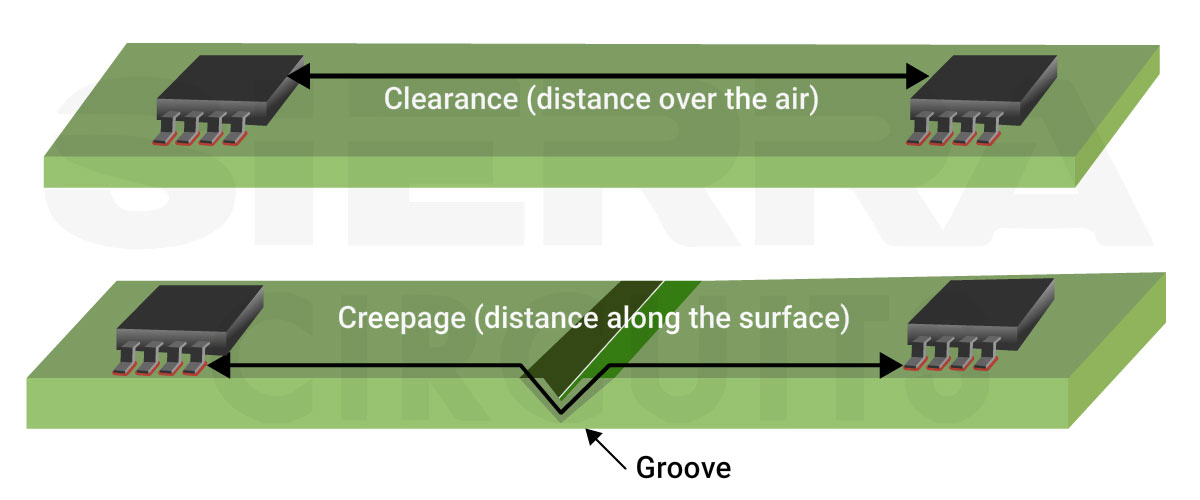
High-current battery systems also require robust fault-protection mechanisms and thermally stable multilayer architectures to maintain long-term operational reliability.
2. Handling thermal stress in fast-charging and power conversion systems
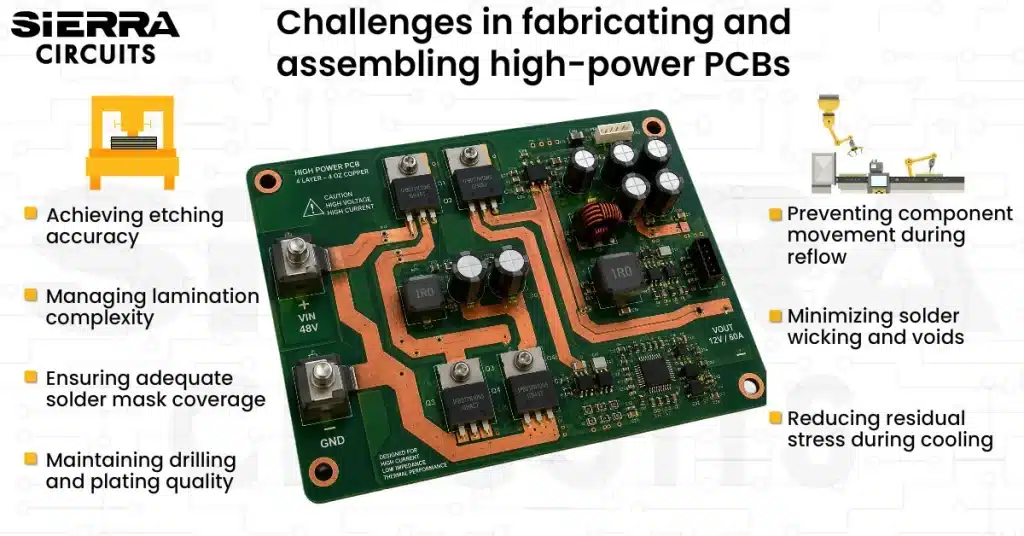
Fast-charging systems and high-power inverters generate substantial thermal and electrical stress during operation. Printed circuit board assemblies used in onboard chargers, DC-DC converters, and traction inverters must therefore provide efficient heat dissipation, EMI suppression, high-current handling, and electrical insulation reliability.
Power devices such as IGBTs, SiC MOSFETs, voltage-regulation modules (VRMs), and high-current charging circuits generate substantial heat during operation. Poor thermal management can result in reduced efficiency, thermal runaway, solder fatigue, component degradation, and reduced system lifespan.
Solution:
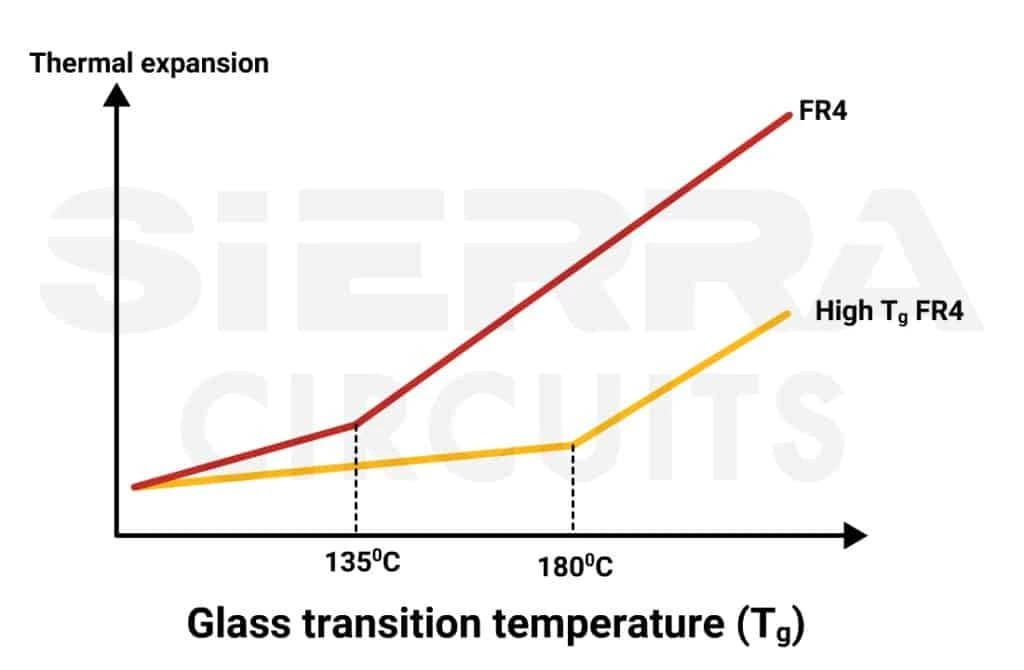
Choose MCPCBs, insulated metal substrates, high-Tg laminates, thermal vias, heat spreaders, and follow standard component placement guidelines.
3. Achieving compact and lightweight electronic architectures
To improve energy efficiency and reduce vehicle weight, EV manufacturers are integrating more electronics into increasingly compact spaces.
This creates demand for technologies that support high component density, reduced wiring complexity, miniaturization, and lightweight system integration.
Solution:
Incorporate HDI, flex, and rigid-flex circuit boards. Implement embedded components, fine-pitch routing, and SMT miniaturization to enable efficient and space-saving packaging architectures.
4. Reducing EMI and signal loss
EV systems combine high-current switching electronics, high-speed communication interfaces, sensor platforms, and radar-based ADAS that must operate reliably in electrically noisy environments. Without effective EMI containment and grounding strategies, switching noise can disrupt automotive Ethernet networks, vehicle communication interfaces, sensors, and advanced driver-assistance functions.
Solution:
Stick to standard EMI and signal-integrity optimization techniques such as:
- Controlled impedance routing
- Differential-pair optimization
- Ground-plane shielding
- Via stitching
- Decoupling capacitors
- Isolation of noisy power sections
- Multilayer grounding structures
For more, download the EMI and EMC Design Guidelines for PCBs.
EMI and EMC Design Guidelines for PCBs
6 Chapters - 77 Pages - 75 Minute ReadWhat's Inside:
- How electromagnetic interference is generated and spreads
- How to identify EMC requirements and applicable standards
- How to design for electromagnetic resilience
- Common EMI sources: Switching circuits, PWM signals, and motors
- PCB structures that cause radiated emissions
- Practical layout, stack-up, filtering, and shielding guidelines
Download Now
5. Ensuring reliability and functional safety
EV PCB systems must maintain long-term reliability under continuous vibration, temperature cycling, electrical noise, and high-power operation. Failures in power electronics or battery-management systems can directly impact vehicle safety and performance.
Solution:
To meet automotive-grade reliability requirements, incorporate:
- Redundant protection circuits
- Overcurrent and short-circuit protection
- Thermal shutdown mechanisms
- Reinforced creepage and clearance structures
- Functional safety validation
- Automotive-grade materials
- Vibration-resistant solder structures
6. Improving protection in EV charging systems
EV charging infrastructure introduces additional challenges because charging systems operate continuously under high power loads.
Solution:
Make sure your charging-system PCBs support:
- High-voltage isolation
- Efficient heat dissipation
- Overcurrent protection
- Outdoor reliability
- EMI containment
- Smart-grid communication
Modern EV charger boards integrate multiple subsystems into a single high-power platform, as listed below:
| Charger subsystem | Function |
|---|---|
| Power modules | Convert and regulate power |
| Communication modules | Vehicle-to-charger communication |
| Control systems | Charging management |
| Protection circuits | Fault and overload protection |
These systems require highly reliable circuit board assemblies capable of continuous high-power operation.
EV chargers often operate outdoors under moisture, dust, UV exposure, humidity, and temperature cycling. To improve long-term reliability, charger PCBs commonly use:
- Corrosion-resistant finishes (e.g, ENIG or immersion tin)
- Sealed enclosures
- Conformal coatings
- Automotive-grade laminates
Here is the summary of the major design challenges faced while building printed boards for electric vehicles and the solutions used to mitigate them.
| Challenge | PCB design solutions |
|---|---|
| High power density | Heavy copper foils, DBC substrates, wide power planes |
| Thermal management | Thermal vias, IMS structures, heat sinks, thermal inlays |
| EMI and signal integrity | Shielding, filtering, multilayer grounding, differential-pair routing |
| Compact layouts | HDI architectures, SMT miniaturization, rigid-flex PCBs |
| Mechanical vibration | Reinforced solder joints, vibration-resistant structures |
| Safety and reliability | High-voltage isolation, redundancy, fault protection |
| EV charging system protection | Conformal coatings, sealed enclosures, corrosion-resistant finishes, automotive-grade laminates |
What are the industry standards for automotive printed circuit boards?
EV printed boards must comply with benchmarks such as IPC-A-610 class 3, IPC-6012FA, ISO 26262, IATF 16949, and CISPR 25. These standards govern product quality, functional safety, manufacturing processes, and electromagnetic compatibility.
| Standard | Purpose |
|---|---|
| IPC-A-610 class 3 | Acceptance criteria for high-performance and high-reliability electronic assemblies |
| IPC-6012FA | Qualification and performance specification for automotive printed boards |
| IPC-2221 | General PCB design standards, including creepage, clearance, and layout guidance |
| ISO 26262 | Functional safety standard for automotive electrical and electronic systems |
| AEC-Q100 / AEC-Q200 | Qualification standards for automotive-grade semiconductor and passive components |
| IATF 16949 | Automotive quality-management standard for manufacturing and supply chain processes |
| CISPR 25 | Electromagnetic interference (EMI/EMC) compliance for automotive electronics |
| ISO 16750 | Environmental conditions and testing standards for automotive electrical and electronic equipment |
| UL 94 | Flammability safety standard for plastic materials used in PCB substrates and components |
In addition to formal standards, EV circuit board systems must withstand extensive automotive validation testing, including thermal cycling, vibration, humidity exposure, power cycling, and high-voltage insulation testing to ensure long-term operational reliability in demanding vehicle environments.
Need assistance with your layout? Check out our PCB design support. Our engineers can help you with material selection, stack-up, component placement, and routing.
Future trends in EV PCB technologies
As EV architectures evolve toward higher power density and autonomous-driving capabilities, circuit board technologies are advancing to support these demands. This evolution is driven by the adoption of silicon carbide (SiC) and gallium nitride (GaN) power devices, DBC ceramic substrates, and embedded-component designs.
Key trends shaping next-generation EV PCBs include:
- Increasing use of SiC and GaN power devices is driving demand for high-frequency and thermally optimized materials.
- Expanded use of DBC ceramic substrates for high-power traction inverters and fast-charging systems.
- Growth of embedded-component technologies that integrate passive and active components directly inside board structures, reducing parasitic effects and improving packaging density.
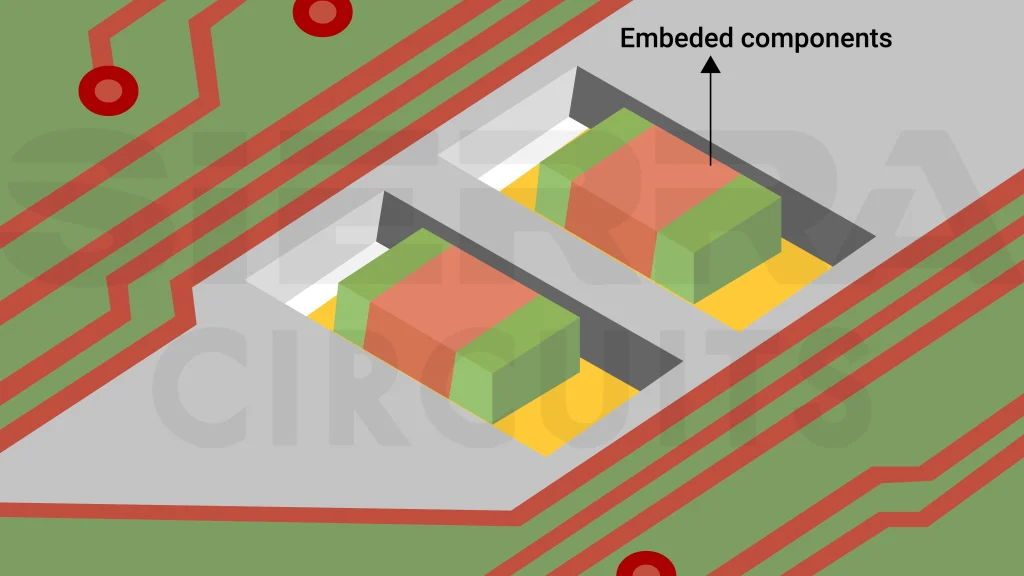
Illustration of embedded passives integrated into a PCB substrate. - Increasing adoption of system-in-package (SiP), chiplet integration, and advanced 3D packaging technologies for centralized vehicle computing and AI-driven ADAS platforms.
- Expansion of high-speed automotive communication architectures, including automotive Ethernet, V2X communication, and AI-driven ADAS platforms, is increasing the need for low-loss high-speed materials.
- Greater adoption of zonal and software-defined vehicle architectures, increasing demand for compact, high-density, and thermally efficient circuit board platforms.
- Increased use of AI-assisted PCB design, simulation, and manufacturing optimization to improve reliability and reduce development complexity.
- Growing emphasis on sustainable printed board manufacturing through lead-free assembly processes, RoHS-compliant materials, and energy-efficient fabrication technologies.
Electric vehicles are driving major changes in circuit board design requirements across power electronics, thermal management, high-speed communication, and high-density interconnect technologies.
From battery management systems and traction inverters to ADAS modules and fast-charging infrastructure, modern EV platforms increasingly depend on advanced materials, multilayer stackups, thermal solutions, and reliable high-current interconnects.
As EV adoption continues to grow, PCB innovation will remain critical for improving vehicle efficiency, safety, and electronic performance.
About the technical reviewer:
Abhishek Chari is the Team Lead for PCB Design at Sierra Circuits, with 6 years of experience specializing in high-speed PCB layouts and advanced HDI technologies. He possesses deep expertise in leading EDA tools, including Altium Designer, Cadence Allegro, Eagle PCB, and KiCAD.
Have queries on designing your next boards? Post them on our community, SierraConnect. Our design experts will answer them.

About Pooja Mitra : Pooja Mitra is an electronics and communication engineer. With an experience of over three years in the PCB industry, she creates industry-focused articles that help electrical and PCB layout engineers.

Start the discussion at sierraconnect.protoexpress.com