




Circuit board component libraries should be managed as part of procurement risk control, not just as a design resource. Organizations with well-governed libraries experience fewer sourcing escalations and faster procurement cycles.
Contents

On-demand webinar
How Good is My Shield? An Introduction to Transfer Impedance and Shielding Effectiveness
by Karen Burnham
When procuring PCBs, engineering and sourcing teams should follow a structured checklist that validates BOM accuracy and assesses fabricator capabilities.
As a hardware engineer, NPI lead, or procurement manager, you must verify component lifecycle status, define attrition buffers, and evaluate cost impact before issuing purchase orders (PO).
In this article, we provide a detailed circuit board (with assembly) procurement checklist to help you prevent delays, avoid sourcing risks, and maintain product launch schedules.
Highlights:
- Component sourcing represents 60 – 80% of total printed board cost and is the leading cause of procurement-related delays.
- Defining attrition buffers prevents kit shortages, partial builds, and assembly schedule slippage.
- End-of-life (EOL) components must be identified during schematic and pre-release BOM reviews to prevent production interruptions.
- Checklist-based board procurement improves engineering and supply chain alignment.
Printed circuit board market projection (2025-2034)
Global PCB market size
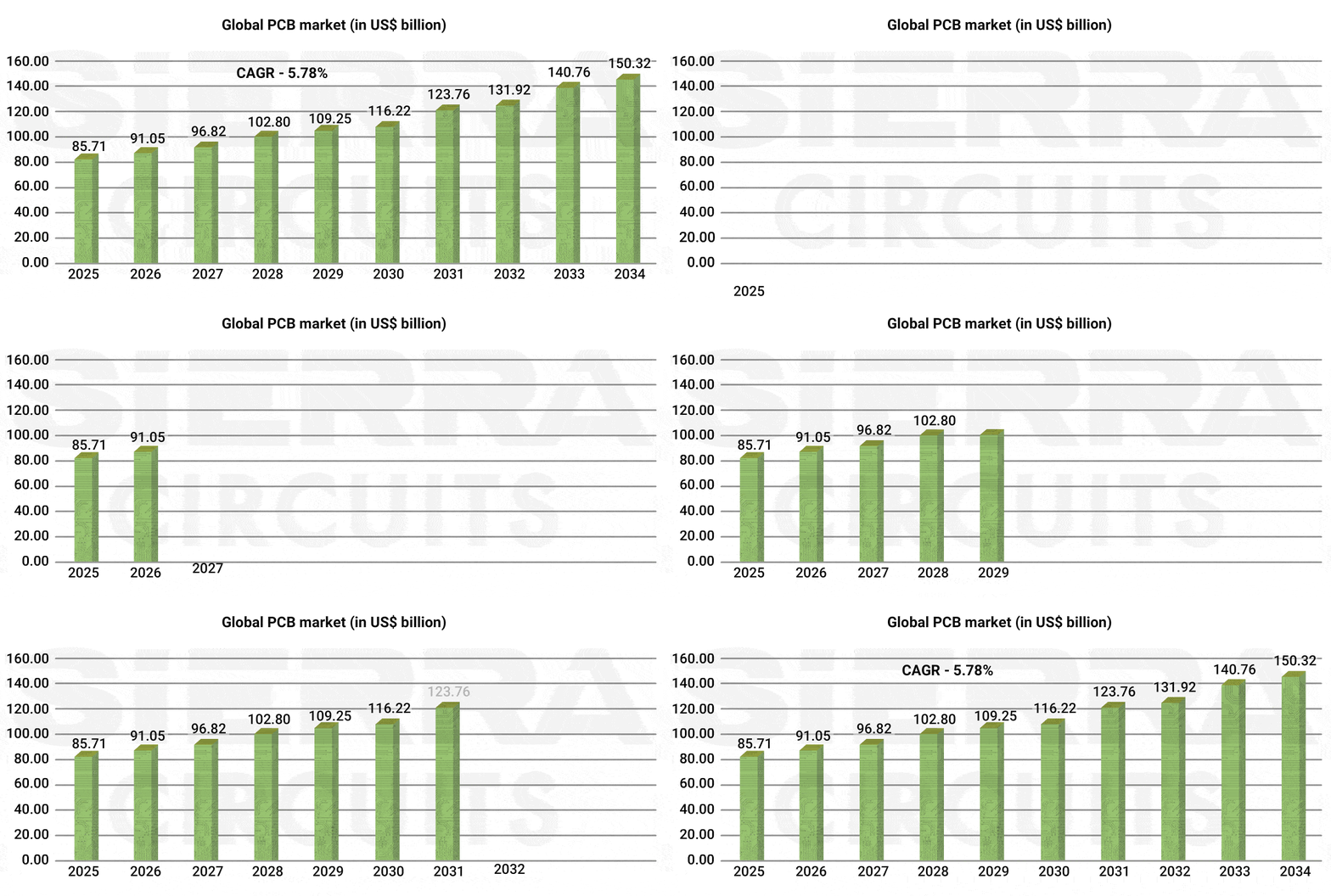
The global circuit board market was valued at USD 85.71 billion in 2025 and is expected to reach USD 150.32 billion in 2034. The market is forecasted to grow at a CAGR of 5.78% from 2025 to 2034.
Printed board market size in the United States of America
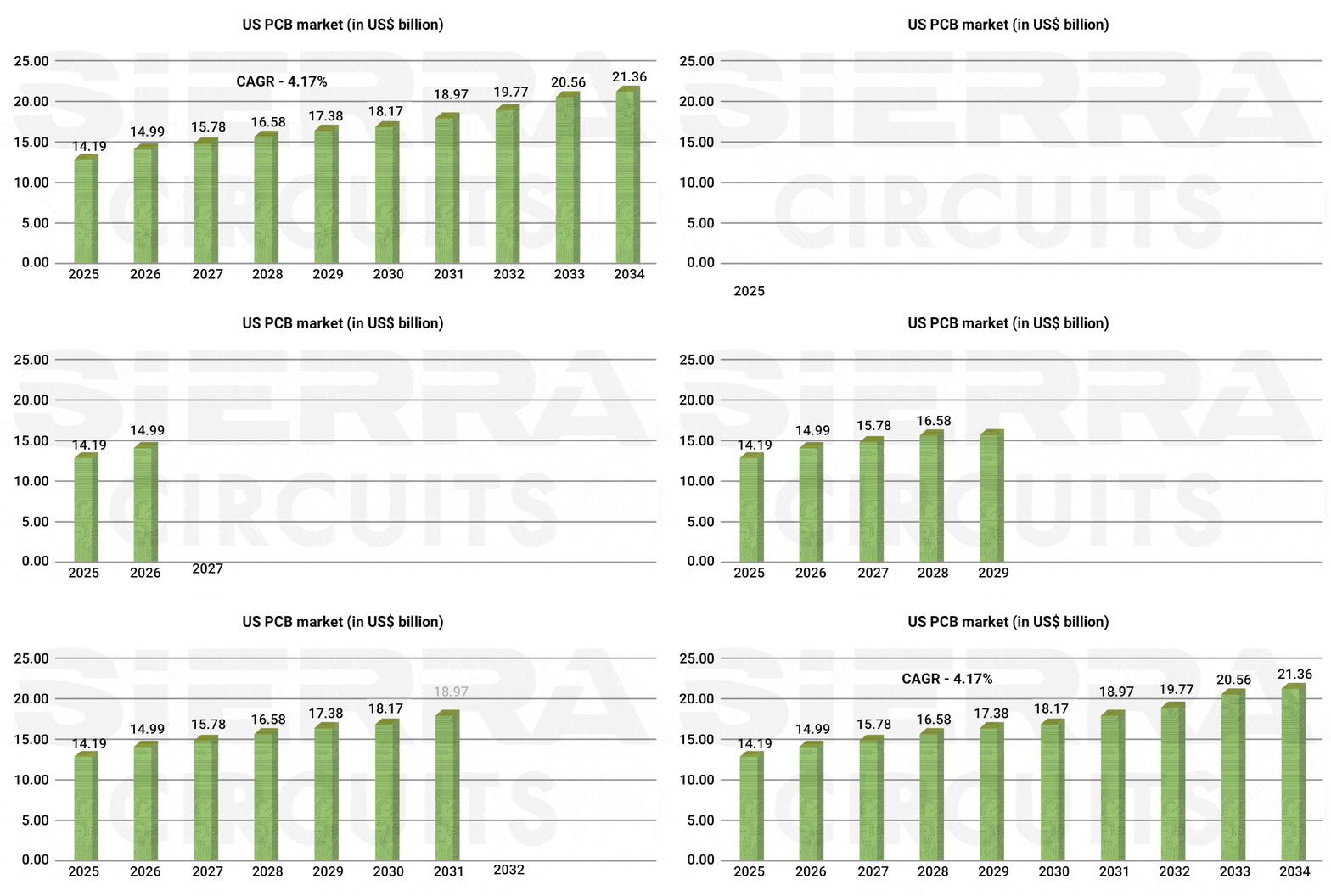
The US circuit board market was valued at USD 14.19 billion in 2025 and projected to reach USD 21.36 billion by 2034. The market is forecasted to grow at a CAGR of 4.17% from 2025 to 2034.
Source: Sierra Circuits’ market research analysis report.
Why is PCB sourcing becoming more complex?
As the market continues to grow, printed board procurement is becoming more challenging due to supply chain volatility and heavy dependency on components.
Extended lead times, component shortages, geopolitical tensions, tariffs, and rapid obsolescence are increasing uncertainty. Since components account for 60 – 80% of total board cost, they are also the primary source of procurement delays.
As a result, effective board procurement requires tighter control of parts availability, BOM accuracy, lifecycle status, and supply chain visibility.
To learn how to avoid assembly delays, download the Design for Assembly Handbook.
Design for Assembly Handbook
6 Chapters - 50 Pages - 70 Minute ReadWhat's Inside:
- Recommended layout for components
- Common PCB assembly defects
- Factors that impact the cost of the PCB assembly, including:
- Component packages
- Board assembly volumes
Download Now
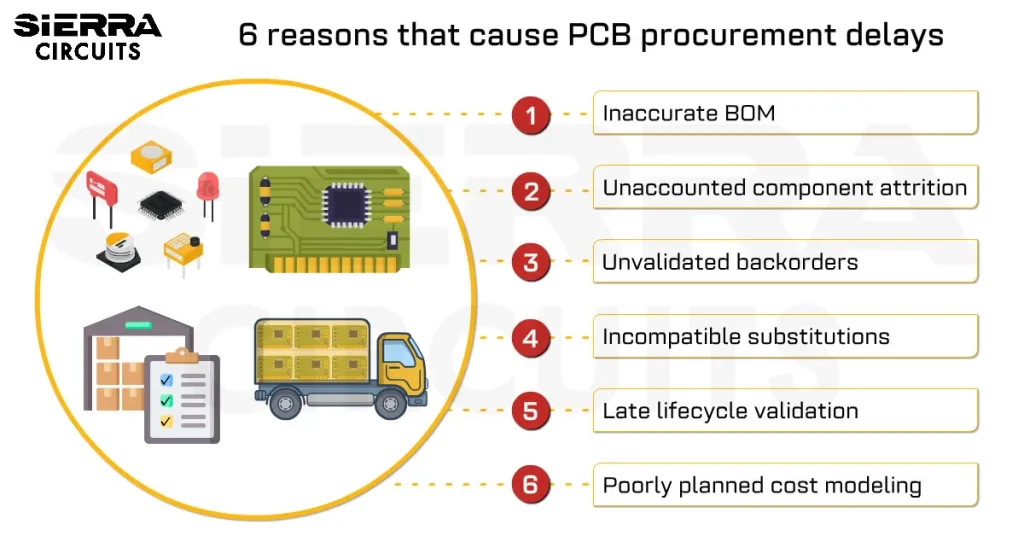
6 reasons that cause printed board procurement delays
Hardware engineers and product developers face sourcing delays due to:
- Inaccurate BOM: A bill of materials issued without validated MPNs, packaging details, or controlled revision history creates component sourcing delays and substitution risk.
- Unaccounted component attrition: Procurement quantities that exclude attrition buffers result in incomplete assembly kits and partial builds.
- Unvalidated backorders: Purchase orders issued without validating real-time stock availability and confirmed lead times can result in components being partially fulfilled or placed on backorder after the PO is acknowledged. This often occurs when availability checks are not performed during the engineering release or sourcing review stage.
- Incompatible substitutions: Part replacements implemented without necessary approvals from hardware engineers introduce reliability, compliance, and traceability risk.
- Late lifecycle validation: Failure to identify obsolete or end-of-life (EOL) components at design phases results in board redesigns and increases sourcing costs.
- Poorly planned cost modeling: Overlooking tariffs, logistics, and pricing tiers in procurement planning results in unexpected cost overruns.
12-point PCB procurement checklist for electronic organizations
Printed board sourcing delays are often preventable when risk is addressed early and systematically.
This checklist helps product developers validate critical parameters before procurement begins.
1. Validate BOM accuracy
The bill of materials (BOM) generated during schematic design must be verified before releasing the purchase orders.
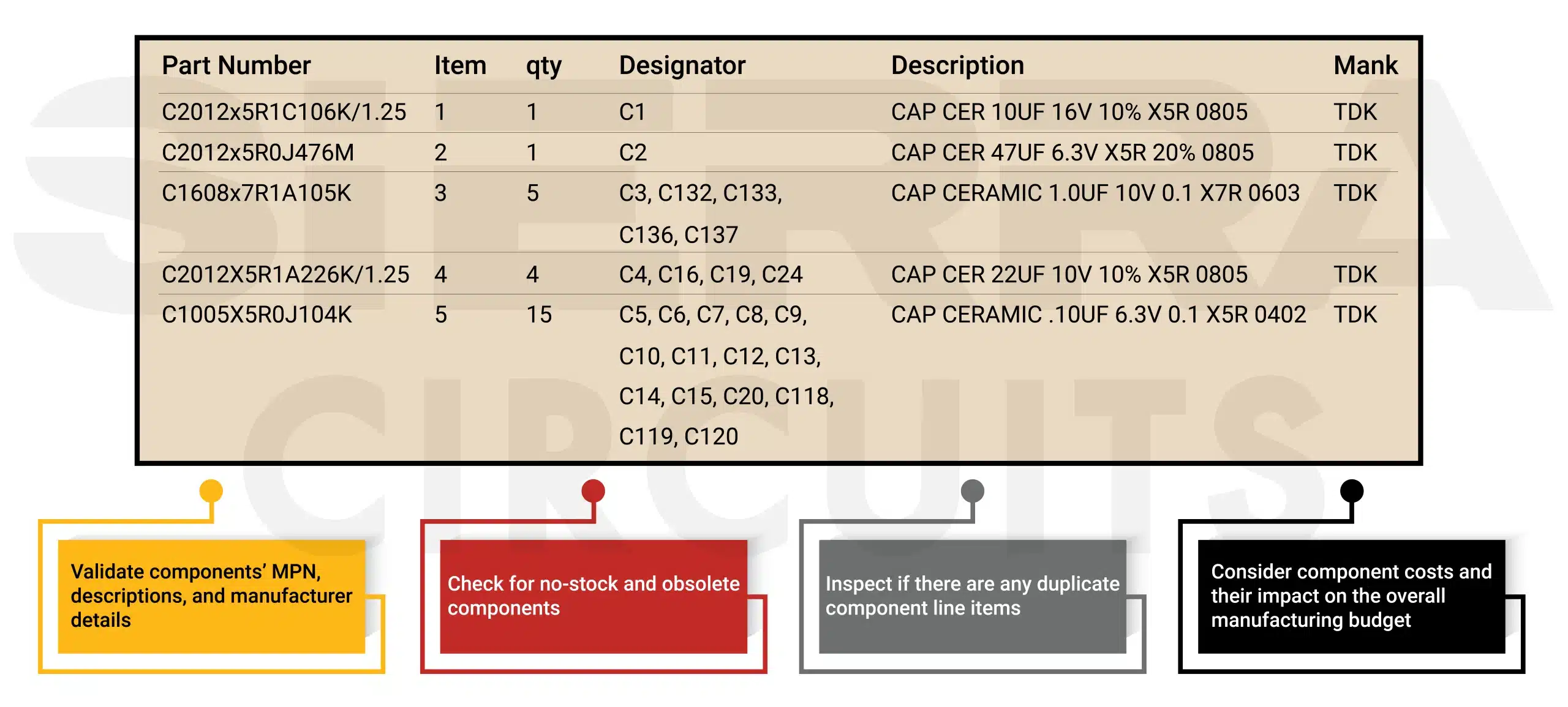
In many organizations, BOMs are assumed to be complete once engineering finishes design. However, procurement teams frequently discover missing, ambiguous, or incorrect information, leading to sourcing delays, emergency substitutions, and increased cost.
Verify the BOM using the checklist below before PCB component sourcing begins.
| No. | Checklist items | ✓ |
|---|---|---|
| 1 | Review the BOM with engineering, procurement, and supply chain teams. | ☐ |
| 2 | Validate MPNs at the packaging level (reel, tray, tube, cut tape). | ☐ |
| 3 | Standardize manufacturer names and align them with distributor databases. | ☐ |
| 4 | Verify footprints and package names against datasheets. | ☐ |
| 5 | Ensure reference designators and quantities match the final layout output. | ☐ |
| 6 | Enforce the approved vendor list (AVL) for each line item. | ☐ |
| 7 | Document approved alternates with defined interchangeability limits. | ☐ |
| 8 | Clearly define DNI/no-fit components. | ☐ |
| 9 | Implement BOM revision control. | ☐ |
2. Account for component attrition requirements
When you choose to consign components to your fabricator/assembly house, you should account for attrition (also called overage).
Part losses occur during kitting, feeder setup, placement calibration, rework, inspection, and yield fallout.
Attrition requirements vary based on:
- Component type (e.g., SMD, BGA, through-hole)
- Package size (small passives often require higher overage)
- Cost and handling sensitivity
- Production volume (prototype or mass production)
Circuit board prototypes and low-volume builds often require higher attrition buffers due to manual handling and limited process stabilization.
Efficient kit preparation plays a key role in controlling overage. For detailed recommendations, see kitting guidelines for PCB assembly.
To eliminate the ambiguity and sourcing risks associated with consigned components, consider opting for Sierra Circuits’ COIN services. Here, we source, verify, and manage parts for your assembly requirements.
Validate attrition calculations using the checklist below before finalizing printed board component procurement quantities.
| No. | Checklist items | ✓ |
|---|---|---|
| 1 | Define and document standard attrition percentages by component category. | ☐ |
| 2 | Apply different overage rules for prototype and production builds. | ☐ |
| 3 | Include overage quantities directly in procurement calculations. | ☐ |
| 4 | Align attrition expectations with contract manufacturers. | ☐ |
| 5 | Configure enterprise resource planning (ERP) systems to calculate procurement quantities inclusive of attrition. | ☐ |
For DFA tips, see 14 tips for PCB design for assembly.
3. Evaluate PCB fabrication requirements
Fabrication parameters must be finalized before sourcing. Cost and lead time mainly depend on circuit board stack-up complexity, dielectric materials, layer count, copper weight, controlled impedance requirements, and fabrication capability.
HDI build-up structure, sequential lamination cycles, drill aspect ratios, and material availability can significantly affect schedule and pricing if not validated early.
Design changes after sourcing release can trigger re-quoting, schedule slips, or DFM holds.
Bare board lead times typically span a few days to weeks, depending on the board complexity. However, fabrication disruptions or material constraints can still delay production if planning assumptions are inaccurate.
Manufacturing capability, quality certifications, and HDI process limits must be confirmed prior to supplier engagement. The image below shows the parameters to be considered when picking a fabricator.
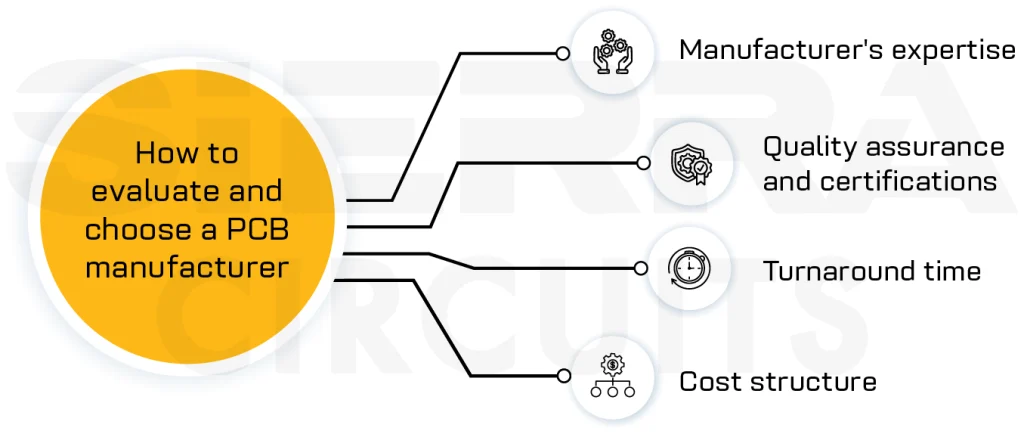
The PCB procurement checklist below outlines the key fabrication parameters to confirm prior to a request for quote (RFQ) or PO release.
| No. | Checklist items | ✓ |
|---|---|---|
| 1 | Review and approve the stack-up prior to sourcing. | ☐ |
| 2 | Confirm material availability (FR4, high-Tg, high-speed laminates, etc.). | ☐ |
| 3 | Finalize layer count, copper weight, and board thickness. | ☐ |
| 4 | Document controlled impedance requirements and align them with the fabricator’s capability. | ☐ |
| 5 | Review the panelization strategy for yield and budget constraints. | ☐ |
| 6 | Validate fabrication lead times and apply schedule buffers. | ☐ |
| 7 | Identify secondary fabrication sources to ensure continuity. | ☐ |
| 8 | Assess geographic concentration and fabrication capacity risks. | ☐ |
Sierra Circuits manufactures and assembles high-quality standard and advanced circuit boards.
Talk to a PCB expert: Book a meeting or call us at +1 (800) 763-7503.
4. Verify real-time component availability and backorder status
One of the most significant challenges in procurement is inventory visibility. Distributor listings do not always reflect actual ship status. Parts shown as available may already be allocated, partially stocked, or pending from the manufacturer.
Delayed components in a purchase order can lead to:
- Partial order shipments
- Incomplete assembly kits
- Schedule delays extending weeks or months
Procurement delays mainly arise from undisclosed or misunderstood availability status, rather than true supply shortages.
Component availability must be verified at the line-item level before releasing the PO.
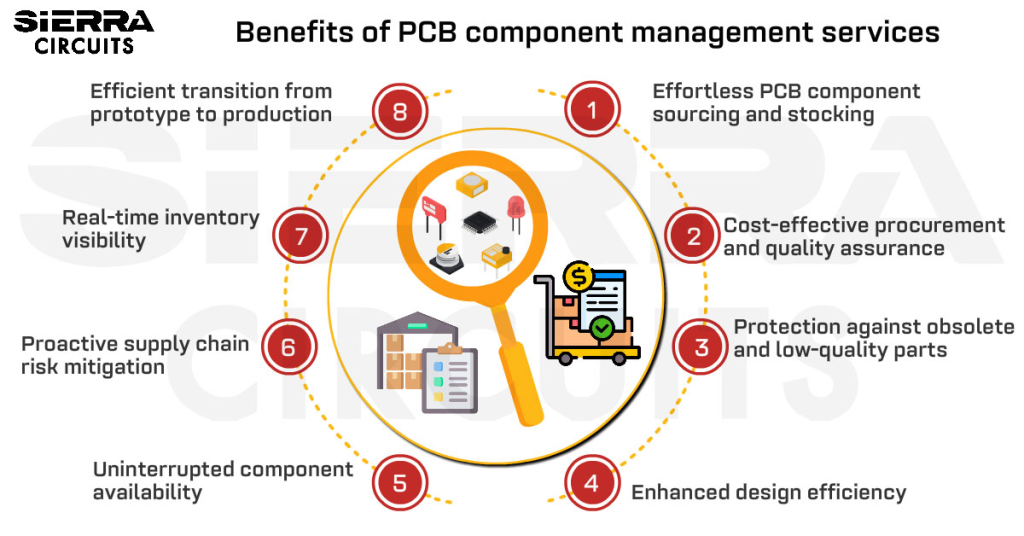
To address this pain point, Sierra Circuits’ COIN platform features real-time inventory visibility, allowing you to easily track available components in stock and identify shortages for your upcoming builds.
The PCB procurement checklist below helps you validate part availability and confirm delivery status prior to order placement.
| No. | Checklist items | ✓ |
|---|---|---|
| 1 | Verify distributor inventory at the line-item level before PO release. | ☐ |
| 2 | Review backorder flags. | ☐ |
| 3 | Document confirmed ship dates. | ☐ |
| 4 | Include secondary approved vendor list (AVL) sources. | ☐ |
| 5 | Define and control the broker usage policy. | ☐ |
5. Document approved part alternates
Component substitution must be controlled based on criticality.
Not all components carry the same functional or reliability risk. Substitution flexibility depends on electrical function, regulatory requirements, and end-product classification.
Consumer electronics may allow broad substitution of standard passives, whereas automotive, industrial, aerospace, and medical systems often require strict qualification and traceability.
Replacement rules must be defined to prevent uncontrolled part changes during shortages or allocation events.
Without a documented substitution strategy, organizations often face last-minute escalations that delay builds and increase risk.
Confirm substitution controls and approved alternates using the checklist below.
| No. | Checklist items | ✓ |
|---|---|---|
| 1 | Classify components by electrical and functional criticality. | ☐ |
| 2 | Define substitution rules by product category and regulatory/compliance requirements. | ☐ |
| 3 | Document approved alternates in a controlled central database. | ☐ |
| 4 | Restrict substitution of reliability-critical, safety-related, and compliance-sensitive components without engineering approval. | ☐ |
| 5 | Formally assign substitution approval authority. | ☐ |
6. Align order quantities with pricing structures
Unit price alone does not determine the entire procurement cost. Total cost includes pricing tiers (volume-based), attrition buffers, logistics, duties, and inventory carrying costs.
Suppliers typically offer tiered pricing, where the unit price decreases at higher quantity brackets.
If your order quantity crosses into the next pricing tier, the unit price drops for the entire order. Even a small increase in order size can move the purchase into a lower price bracket and reduce the overall cost. Procurement quantities should be aligned with demand forecasts and planned build schedules before releasing the PO.
Strategic quantity planning and consolidated purchasing can reduce overall component spend, especially in medium- to high-volume projects where pricing tiers significantly impact cost.
The PCB procurement checklist below outlines the key cost drivers.
| No. | Checklist items | ✓ |
|---|---|---|
| 1 | Review quantity price breaks for each BOM line item. | ☐ |
| 2 | Align attrition quantities with pricing tiers. | ☐ |
| 3 | Consider multi-build procurement planning. | ☐ |
| 4 | Include logistics, shipping, and duties in the total spend analysis. | ☐ |
| 5 | Evaluate cost trade-offs against inventory carrying cost and storage risk. | ☐ |
7. Monitor component lifecycle
As product lifecycles become shorter and semiconductor manufacturers update their portfolios, electronic components can transition to end-of-life during development or even after production begins. Obsolete or near-end-of-life components introduce redesign risk, procurement delays, and cost escalation.
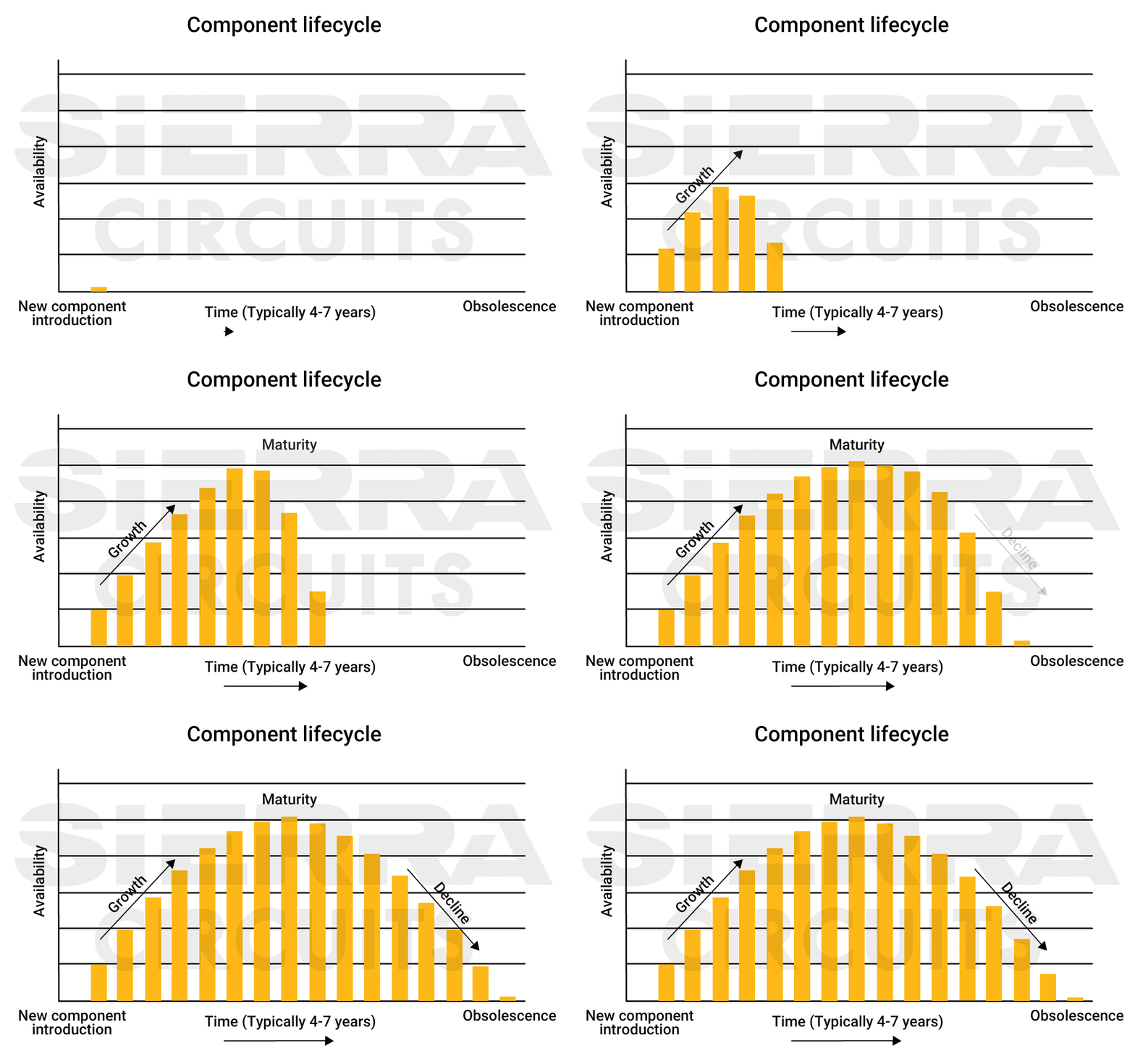
Typical lifecycle risk scenarios include:
- Obsolete or not recommended for new designs (NRND) components specified during schematic capture.
- Active components transitioning to EOL.
- Long-lead or allocation-sensitive parts are becoming unavailable at production scale.
Lifecycle validation should be performed at defined design review stages, not only during initial part selection.
Failure to monitor lifecycle status can result in mid-program redesigns and production interruptions.
Use the PCB component procurement checklist below to avoid these potential issues.
| No. | Checklist items | ✓ |
|---|---|---|
| 1 | Review lifecycle status after finalizing the schematic. | ☐ |
| 2 | Validate the BOM before releasing the project to layout. | ☐ |
| 3 | Implement a continuous obsolescence monitoring process. | ☐ |
| 4 | Define approved redesign and alternate qualification workflows. | ☐ |
| 5 | Evaluate long-term supply agreements for critical or long-lead components. | ☐ |

8. Account for country of origin, tariffs, and trade risk
Trade regulations and regional policy changes directly influence part cost and supply stability.
Tariffs, import duties, export controls, and regional sourcing constraints can increase cost depending on the component category and manufacturing origin.
Trade exposure must be evaluated prior to procurement release to prevent supply disruption. These variables should be incorporated into the total cost before sourcing commitments are finalized.
Organizations that ignore trade risk often face unexpected cost increases, compliance violations, and production delays.
The procurement checklist below helps you assess PCB trade exposure and compliance risk.
| No. | Checklist items | ✓ |
|---|---|---|
| 1 | Document the country of origin for critical and high-spend components. | ☐ |
| 2 | Include tariffs and duty exposure in cost calculations. | ☐ |
| 3 | Evaluate regional sourcing alternatives to reduce geographic concentration risk. | ☐ |
| 4 | Retain export control and compliance documentation and maintain traceability. | ☐ |
9. Maintain component libraries with approved parts and alternates
Part libraries directly influence procurement accuracy and sourcing stability.
Manufacturer part numbers, footprints, approved alternates, and supply chain metadata are typically defined at the library level. Inaccurate or uncontrolled library data propagates into the BOM and creates sourcing errors, substitution ambiguity, and procurement delays.
Uncontrolled library data increases sourcing escalations, substitution risk, and procurement cycle time.
Use the PCB procurement checklist below to prevent substitution risk.
| No. | Checklist items | ✓ |
|---|---|---|
| 1 | Maintain centralized control of libraries with defined access permissions. | ☐ |
| 2 | Enforce approved parts and AVL rules at the library level. | ☐ |
| 3 | Embed manufacturer part numbers and supply chain attributes in part records. | ☐ |
| 4 | Conduct periodic audits to remove obsolete or non-compliant parts. | ☐ |
| 5 | Formally assign library ownership and approval authority. | ☐ |
10. Synchronize BOM data across CAD, PLM, and ERP systems
Procurement data must remain synchronized across computer-aided design (CAD), product lifecycle management (PLM), and ERP platforms.
BOM inconsistencies between design tools and enterprise systems create revision drift, incorrect purchase orders, and traceability gaps.
Manual data transfers increase the risk of version mismatch, data corruption, and sourcing errors.
Confirm system-level BOM synchronization using the checklist below.
| No. | Checklist items | ✓ |
|---|---|---|
| 1 | Synchronize the BOM across CAD, PLM, and ERP systems. | ☐ |
| 2 | Enforce revision control across all systems. | ☐ |
| 3 | Define and system-control engineering change workflows. | ☐ |
| 4 | Standardize supplier data across platforms. | ☐ |
| 5 | Maintain end-to-end audit trails and traceability. | ☐ |
11. Identify and mitigate part supplier dependencies
Supplier dependency must be evaluated as a part of procurement risk control. Over-reliance on single suppliers for components introduces continuity risk. Organizations with multi-sourcing strategies recover faster from supply disruptions.
Evaluate supplier concentration risk using the checklist below.
| No. | Checklist items | ✓ |
|---|---|---|
| 1 | Identify single-source dependencies across components. | ☐ |
| 2 | Qualify secondary suppliers where technically and commercially feasible. | ☐ |
| 3 | Periodically review supplier financial stability. | ☐ |
| 4 | Assess regional concentration risks. | ☐ |
| 5 | Document contingency and continuity plans. | ☐ |
12. Align procurement with demand and inventory planning
Procurement decisions have long-term inventory implications, particularly for long-lead components.
Over-ordering increases carrying cost and write-off risk. Under-ordering creates shortages and production delays, particularly for allocation-sensitive parts. Procurement planning must align with forecast accuracy, build schedules, and the product lifecycle stage.
Misalignment between procurement and demand planning increases excess inventory exposure, obsolescence risk, and production instability.
Use the PCB procurement checklist below before committing to long-lead purchases.
| No. | Checklist items | ✓ |
|---|---|---|
| 1 | Align demand forecasts with procurement planning. | ☐ |
| 2 | Define safety stock levels based on lead time and demand variability. | ☐ |
| 3 | Evaluate build-ahead strategies against forecast stability and lifecycle stage. | ☐ |
| 4 | Continuously monitor excess inventory and obsolescence risk. | ☐ |
| 5 | Evaluate inventory carrying cost and write-off risk prior to large-volume commitments. | ☐ |
A modular PCB architecture can reduce redesign impact when components become obsolete.
Printed board procurement directly influences your product’s time-to-market, cost control, and long-term supply stability.
By following this structured checklist-driven PCB procurement framework and integrating it across engineering, sourcing, and operations, hardware engineers, product developers, and organizations can reduce schedule risk, prevent kit shortages, and improve production predictability.
About the technical reviewer:
Steve Carney is an R&D Project Manager at Sierra Circuits with over 17 years of experience in printed board fabrication. He specializes in manufacturing HDI, high-speed, and other advanced circuit boards.
Need assistance building your stack-up? Post your queries on our forum, SierraConnect. Our design and manufacturing experts will help you select one.

About Pooja Mitra : Pooja Mitra is an electronics and communication engineer. With an experience of over three years in the PCB industry, she creates industry-focused articles that help electrical and PCB layout engineers.

Start the discussion at sierraconnect.protoexpress.com