

Contents

On-demand webinar
How Good is My Shield? An Introduction to Transfer Impedance and Shielding Effectiveness
by Karen Burnham
Conformal coating is a protective process that deposits a thin, non-conductive polymer film over the PCB surface. It forms a barrier and protects the board from moisture, dust, chemicals, and temperature variations, extending operational life and maintaining electrical integrity.
Without proper coating, environmental exposure can lead to leakage current, electrochemical migration, corrosion, and premature failure.
These coatings are applied in liquid or gas form and cure into either a hard or rubber-like protective layer. Common resin bases include acrylics, polyurethanes, silicones, epoxies, and parylene.
In this article, you will learn conformal coating types, application methods, and removal techniques used in PCB manufacturing.
Highlights:
- Use conformal coating to protect PCBs from moisture, corrosion, and mechanical stress.
- Select application methods based on volume and precision needs. Use brushing for prototypes, spraying for production, dipping for uniformity, and vapor deposition for high-reliability applications.
- Match coating chemistry to environmental exposure, rework requirements, and cost constraints.
- Apply localized removal techniques (e.g., soldering, solvents) for small areas or opt for complete stripping (e.g., chemical stripping, abrasion) for full board rework.
Why is conformal coating used?
The primary function of a coating is to provide an insulation layer that prevents environmental contaminants and operational stress from reaching the board surface. It performs the following functions:
- Offers high insulation protection, resulting in closer conductor spacing.
- Acts as a resistant barrier to moisture and humidity, reducing leakage current, crosstalk, and electrochemical migration across the board.
- Protects the board from chemical and corrosive attacks. It prevents damage from rough handling and thermal and mechanical stress.
- Increases the strength between dielectric conductors.
- Provides a barrier against particulate contaminants reaching the board surface.
To learn how to avoid assembly delays, download the Design for Assembly Handbook.
Design for Assembly Handbook
6 Chapters - 50 Pages - 70 Minute ReadWhat's Inside:
- Recommended layout for components
- Common PCB assembly defects
- Factors that impact the cost of the PCB assembly, including:
- Component packages
- Board assembly volumes
Download Now
How to apply conformal coating?
Application methods include brushing, spraying, dipping, or vapor deposition. The chosen technique depends on production volume, precision requirements, and coating chemistry. Let’s look at each application method in detail.
Brushing
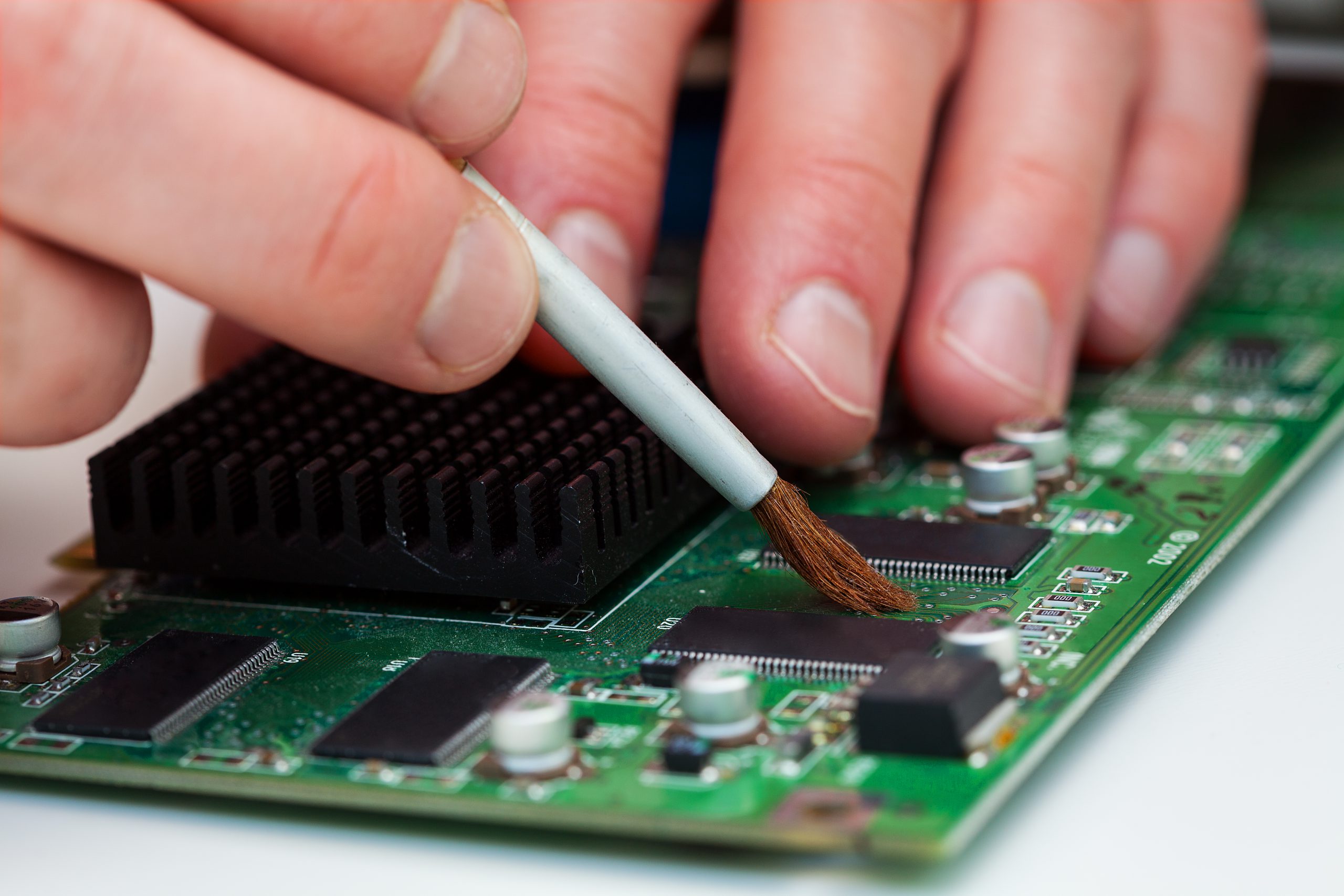
This is a manual application process in which a liquid coating is applied to the PCB using a hand-held brush. It is suitable for low-volume production, prototyping, and rework applications. Although the process is straightforward, achieving uniform thickness and surface finish requires operator skill. The basic setup includes a brush, a container for the coating material, and a controlled work area to prevent contamination.
The quality of the coating depends on several factors, including brush type, operator skill, coating viscosity, and coating material. It offers advantages like low setup costs, simplicity, and fewer process control requirements.
Spraying
This technique distributes coating material evenly across the PCB surface. It offers better uniformity and process control compared to manual brushing. Common spraying techniques include aerosol spraying, batch spraying, and selective spraying.
- Aerosols: It uses pre-packaged, solvent-based coating delivered through a handheld spray can inside a spray booth to control overspray and contamination. This method is cost-effective, easy to implement, and suitable for low-volume production and rework. It provides improved finish consistency compared to brushing while maintaining low setup requirements.
- Batch spraying: Uses a compressed air spray gun connected to an air compressor. This method delivers a high-quality, uniform coating finish when properly configured. Critical process parameters include atomization pressure, spray pattern, coating viscosity, and material feed rate to ensure consistent coverage. Batch spraying offers flexibility and moderate setup costs, making it suitable for small- to medium-scale production.
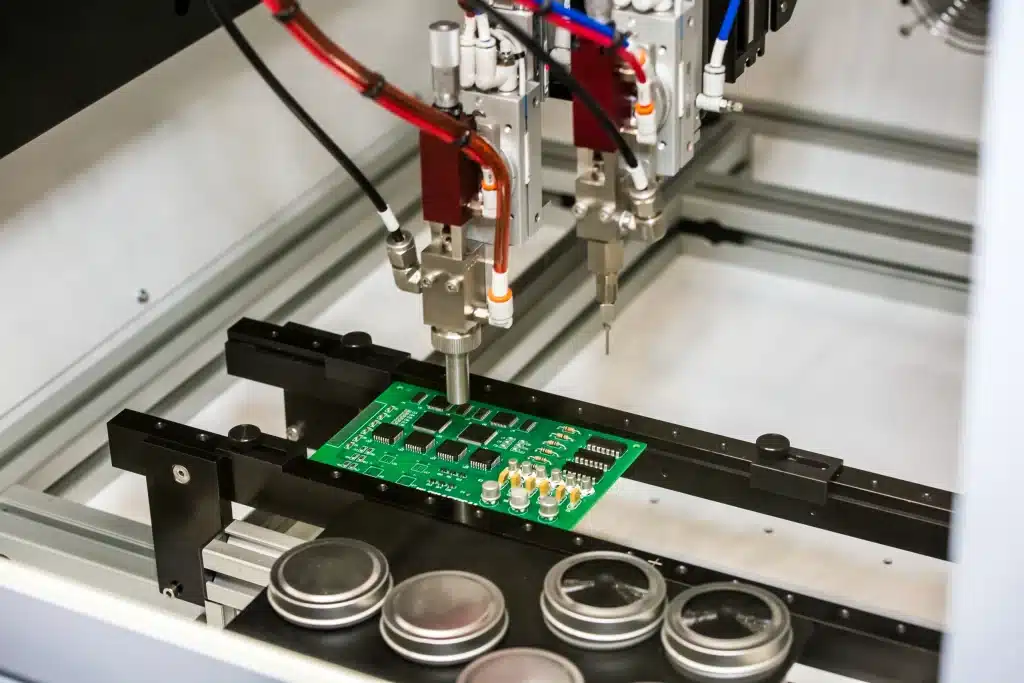
- Selective spraying: An automated process that applies coating only to designated areas of the PCB. A programmable robotic system controls spray patterns and positioning, eliminating the need for masking in many cases. Proper valve selection, coating material compatibility, and board configuration are essential for optimal performance.
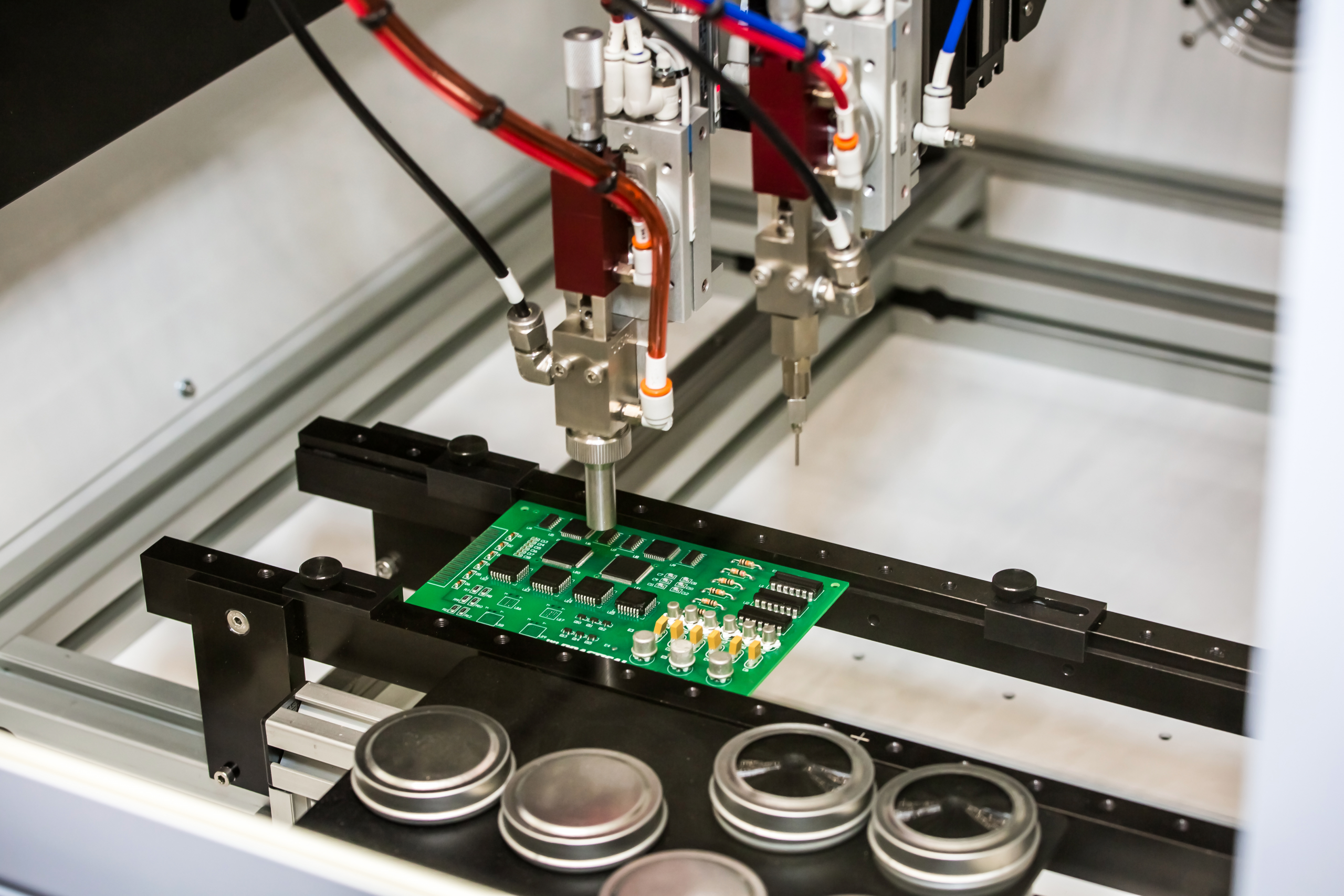
This method provides high precision and repeatability but requires significant capital investment and technical expertise for programming and maintenance. Spray application supports most conformal coating chemistries. However, automated systems require ongoing monitoring of environmental conditions and material performance to ensure long-term process stability.


Dipping
This is a traditional method in which the PCBs are submerged in a coating liquid tank. The variables controlling the process are the speed of immersion, dwell time, and the board’s withdrawal speed. For dipping, solvent-based conformal coating, like acrylics and urethanes, is suitable. It is a high-speed process preferable for batch and inline production.

Vapor deposition
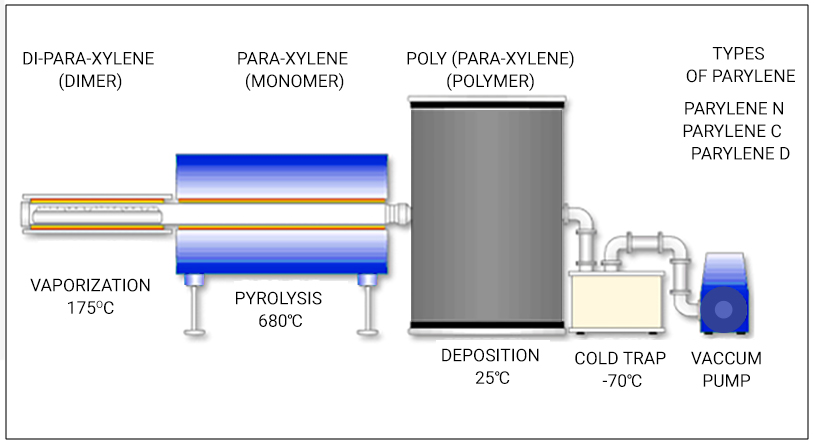
This process deposits conformal coating in gaseous form inside a controlled vacuum chamber. Parylene (p-xylylene polymer) coatings are deposited through a chemical vapor deposition (CVD) process, forming a uniform, pinhole-free protective layer across the PCB surface.
The process consists of four key stages:
- Parylene vaporization
- Pyrolysis
- Coating deposition
- Cold trap
It is an expensive process best suitable for medium and high production volumes. Surface preparation is complex, but vapor deposition gives excellent protection against moisture and superior electrical properties compared to other coatings.
Sierra Circuits manufactures and assembles high-quality standard and advanced circuit boards.
Talk to a PCB expert: Book a meeting or call us at +1 (800) 763-7503.
Step-by-step conformal coating application process
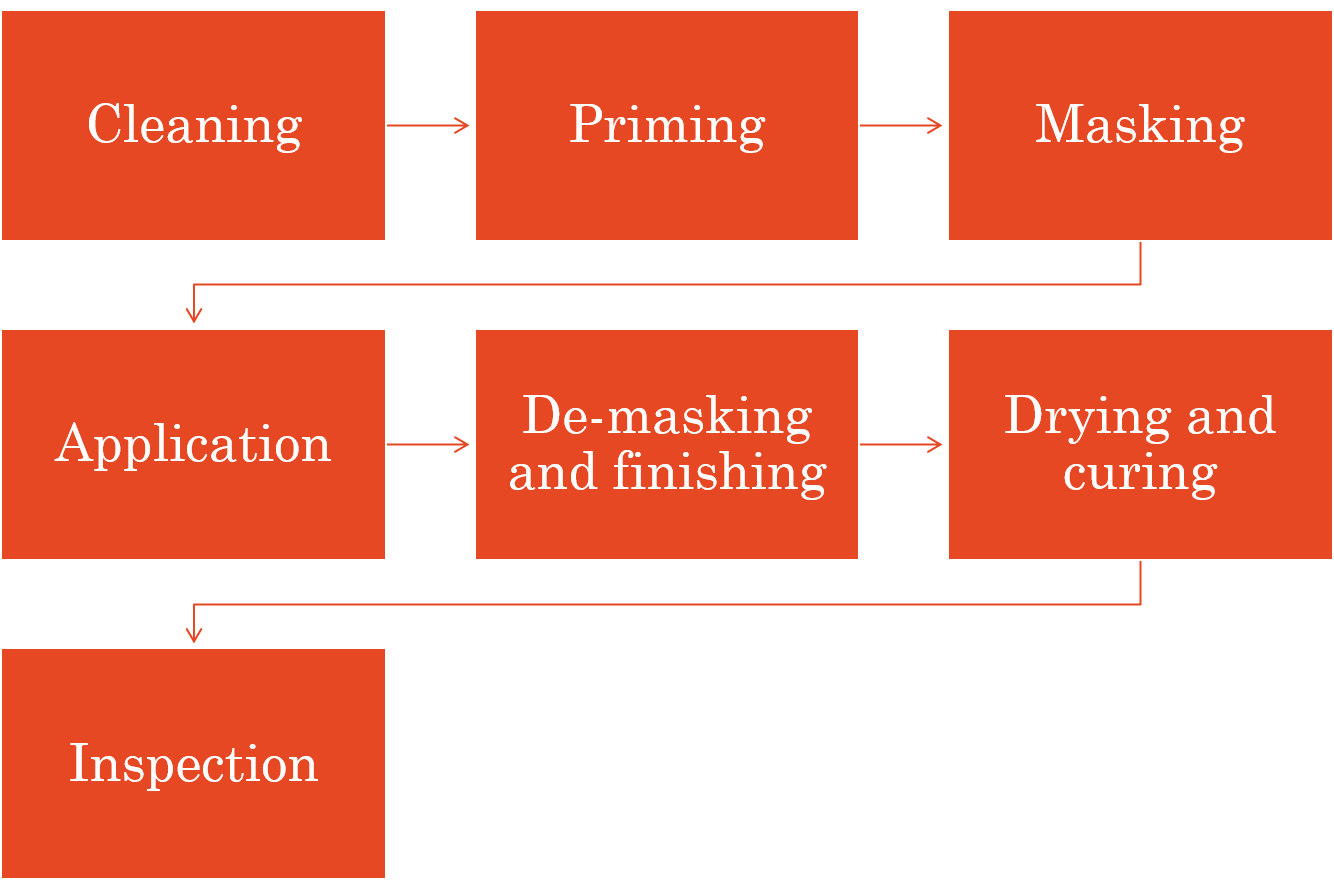
The application process involves the following 8-step production process that ensures uniform coverage, strong adhesion, and reliable long-term protection of the PCB.
Step-1: Cleaning
The board must be free of residues from operator handling, soldering fluxes, and environmental contamination. The cleaning techniques include:
- Aqueous chemistries
- Solvent cleaning
- Plasma cleaning
Cleanliness is validated through:
- Ionic contamination testing
- Ion chromatography
- Surface insulation resistance
Step-2: Priming
A preparatory coating is applied to a board before conformal coating, and this process is called priming. It ensures better adhesion and forms a binding layer to retain the coating. The requirement for the priming differs as per the type of resin.
- Acrylic and polyurethane: These generally offer excellent adhesion and wetting, making priming unnecessary for most applications.
- Silicone: Primers are frequently necessary to ensure these coatings adhere properly to the substrate.
- Parylene: Priming is crucial and is achieved through either liquid application or gas phase deposition
Step-3: Masking
Designated areas that must remain uncoated, such as connectors, switches, test points, and high-heat components, are covered using masking materials like:
- Masking tapes, dots, and shapes
- Liquid latex
- Masking boots
Proper material selection is important to avoid masking failure.
Step-4: Application
Conformal coating is applied using a chosen method (brushing, spraying, dipping, and vapor deposition) based on volume and precision.
Step-5: De-masking and finishing
The masking materials are carefully removed once the application is complete. Next, the finishing process is implemented to ensure:
- Quality of coating
- Prevention of masking leakage
- Verification of standards
- Prevention of coating defects
Step-6: Drying and curing
- Drying prepares the PCB for safe handling by allowing solvents to evaporate after application. Depending on the coating type and environmental conditions, drying may take from a few minutes to several days.
- Curing ensures the material reaches its full strength to provide the electrical insulation and chemical resistance needed. During this stage, the polymer cross-links or chemically reacts to develop insulation strength, adhesion, and chemical resistance required for long-term reliability. Different curing mechanisms include usage of heat, moisture, UV light, or catalytic reactions.
Step-7: Inspection
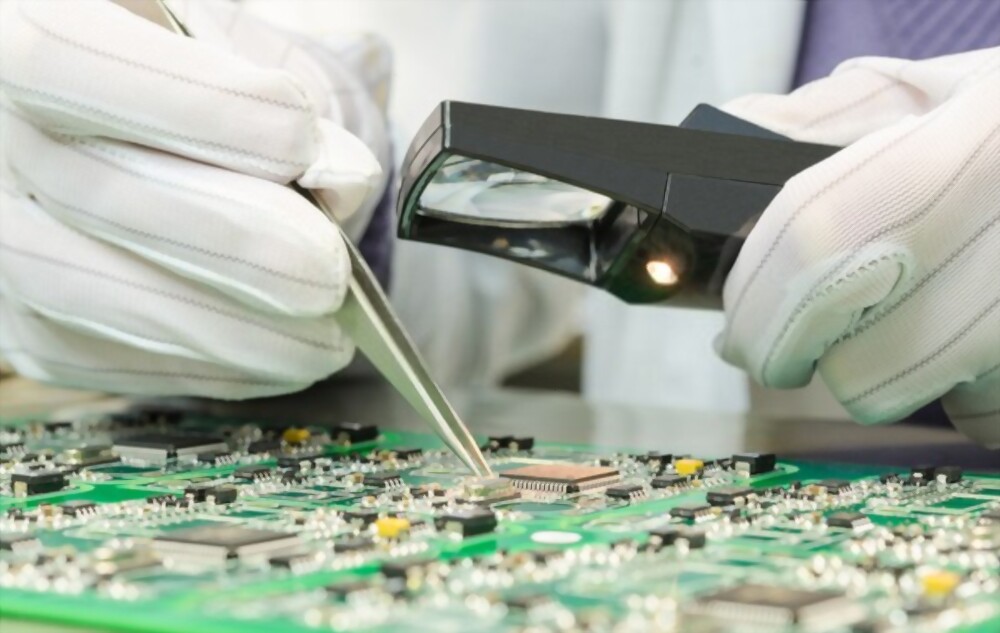
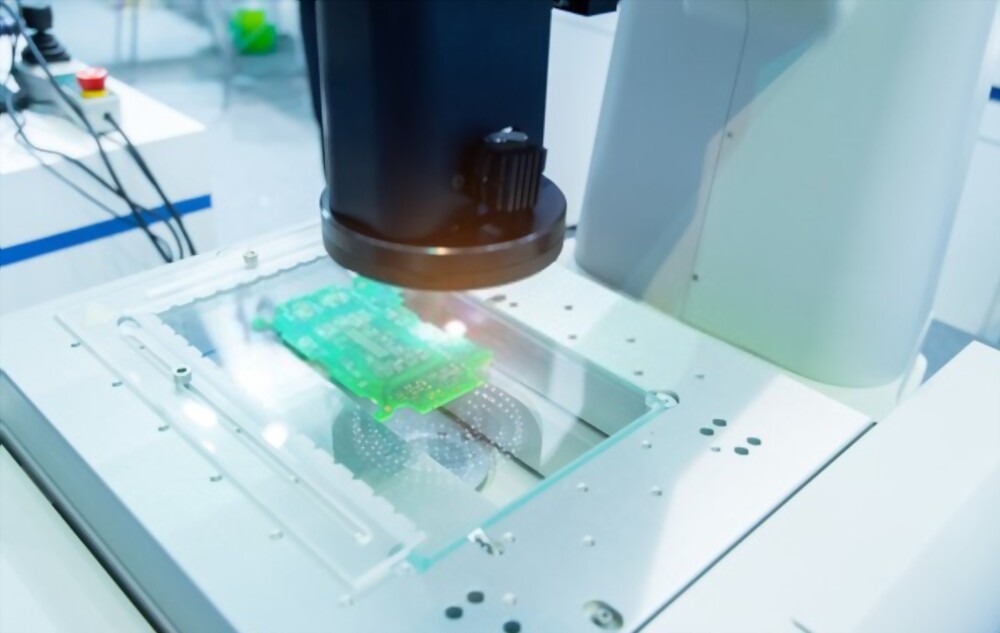
The cured board is inspected for defects such as bubbles, voids, or delamination using manual inspection, UV lamp visibility checks, or automated optical inspection (AOI).
Download the PCB Material Design Guide to learn how to pick the right laminates.
PCB Material Design Guide
9 Chapters - 30 Pages - 40 Minute ReadWhat's Inside:
- Basic properties of the dielectric material to be considered
- Signal loss in PCB substrates
- Copper foil selection
- Key considerations for choosing PCB materials
Download Now
Which conformal coating chemistry should you choose?
The right chemistry depends on your board’s operating environment, temperature range, rework needs, chemical exposure, and mechanical stresses.
| Conformal coating chemistry | Type | Key properties | Applications |
|---|---|---|---|
| Acrylic | Organic liquid | Easy to rework/repair, fast drying, moisture resistant | General-purpose, consumer electronics |
| Polyurethane | Organic liquid | High dielectric strength, excellent abrasion, and solvent resistance | Harsh chemical environments, fuel sensors |
| Epoxy | Organic liquid | High Tg, very hard finish, resists abrasion and high heat (150°C) | Rugged industrial applications where rework is not required |
| Silicone | Inorganic liquid | Wide temperature range (−65°C to 200°C), flexible (low Tg), vibration-damping | Automotive (under-hood), outdoor, and aerospace |
How to remove the conformal coating from PCB?
There are different methods to remove unwanted conformal coating for repair or rework, depending on the area size (localized vs. complete removal) and the type of coating chemistry.
Localized removal
This method targets small areas for rework to uncover coating from specific components or pads without removing the coating from the rest of the board.
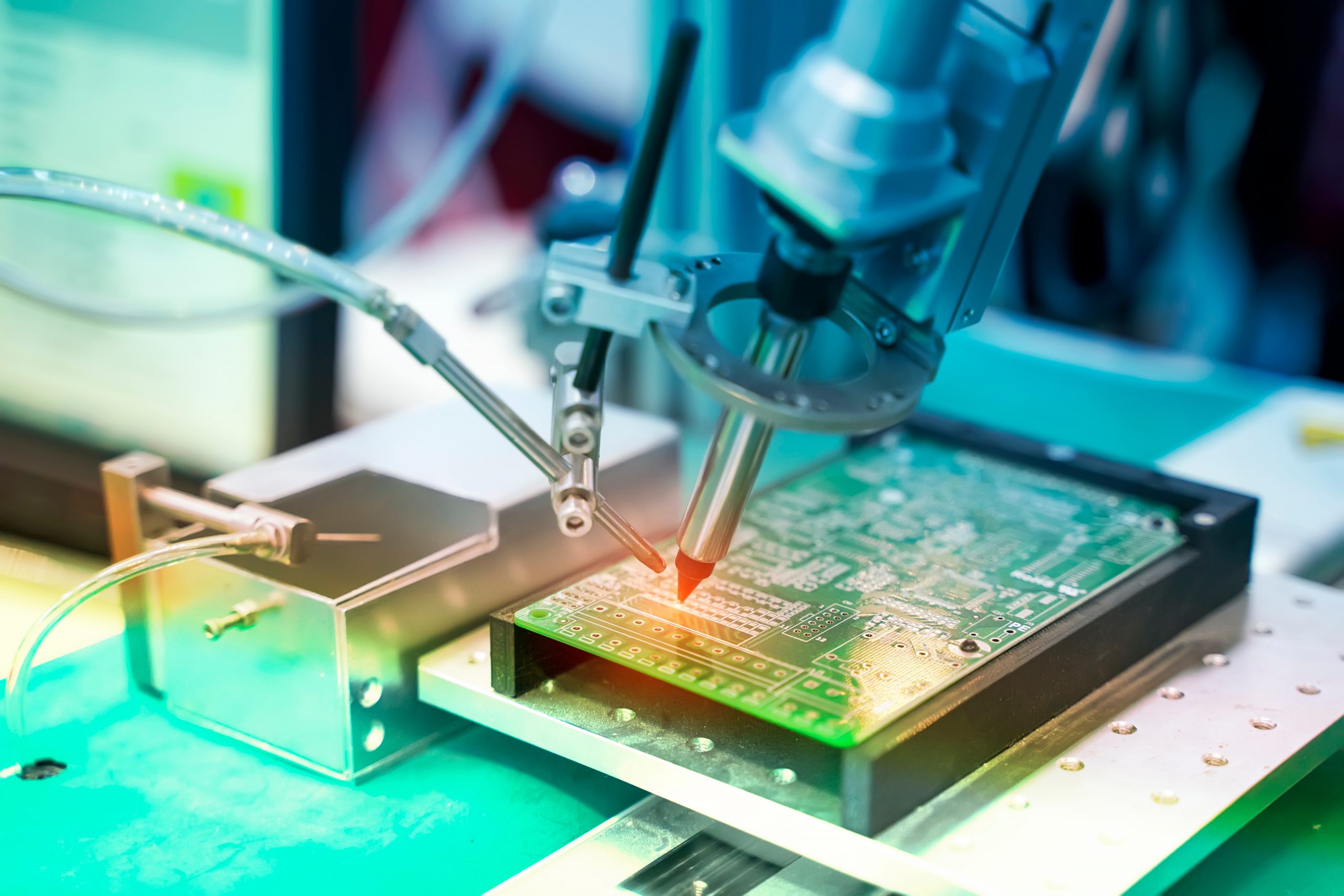
- Soldering: A heated soldering iron tip softens and melts the conformal coating, enabling access to the underlying solder joint. This method may affect cosmetic appearance, but allows quick access for minor rework.
- Chemical removal: Apply a compatible solvent or stripping fluid to the coated area using a cotton swab or brush. The solvent breaks down the polymer structure, allowing the coating to dissolve. Proper solvent selection is critical and must match the coating chemistry (e.g., acrylic, polyurethane, or silicone).
- Mechanical abrasion: A controlled, handheld abrasive blasting tool directs fine particles at the target area to remove the coating. This method provides precise removal but requires thorough post-process cleaning to eliminate residual abrasive debris.
Complete removal
This is typically done when a coating has failed completely or during a total board rework.
- Chemical stripping: Submerge the PCB in a sequence of tanks containing formulated stripping agents that dissolve the coating. This method removes the coating efficiently but requires strict handling procedures and controlled chemical disposal.
- Mechanical abrasion: Automated abrasive blasting systems remove coating across the entire board surface. Although slower than chemical stripping, this approach reduces exposure to aggressive solvents and may be preferable for sensitive assemblies.
Sierra Circuits assembles high-reliability circuit boards, integrating a precision conformal coating process to protect against moisture, chemicals, and extreme environments.
To learn more, check our PCB Assembly capabilities.
Conformal coating is a critical protective process in printed circuit board assembly that enhances insulation, prevents corrosion, and improves long-term reliability. Selecting the appropriate chemistry, application method, and curing process ensures optimal protection without compromising manufacturability.
As electronics operate in increasingly harsh environments, conformal coating remains an essential reliability strategy.
Need assistance in selecting the right conformal coating for your design? Post your queries on our PCB forum, SierraConnect. Our design and manufacturing experts will help you select one.