
Soldering Flux eBook
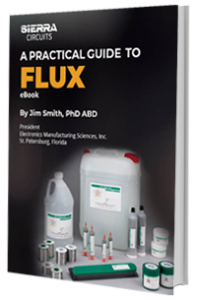
The Soldering Flux eBook by Jim Smith explains flux ingredients, classifications, cleaning requirements, and selection criteria for reliable PCBAs.


The Soldering Flux eBook covers how flux works during soldering, what affects its performance, and the factors to consider when choosing the flux for an application.
This eBook covers the key aspects of soldering flux, including:
- Key ingredients and their functions
- Acids and activators for oxide removal
- Solids for protecting soldering surfaces
- Solvents for dissolving and delivering flux ingredients
- Types and classification of soldering fluxes
- Understanding flux formulations and activity levels
- How to read a flux manufacturer’s technical data sheet
- Important flux properties to consider when evaluating a formulation
- How to compare fluxes for different soldering requirements
- Choosing the right flux for different soldering applications
The following sections take a closer look at these topics.
Why is flux needed for soldering?
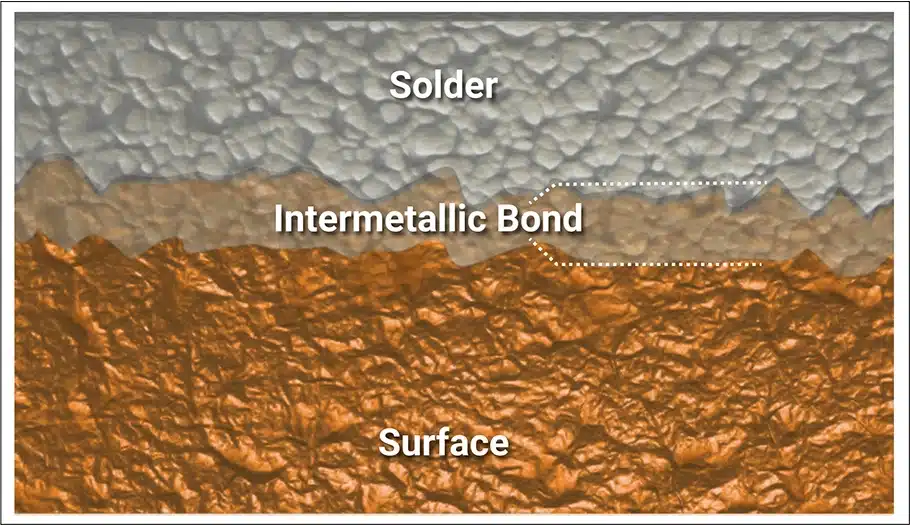
Soldering is all about establishing a reliable connection between the solder and the surfaces being joined. For solder to wet a metal area, the surface must be free of oxides. Metal surfaces can develop oxide layers when exposed to oxygen, and these oxides prevent the solder from contacting the underlying metal. As a result, proper wetting cannot occur.
Flux addresses this problem by removing oxides from the metal surface. However, removing oxides alone is not enough. Once exposed, a clean metal surface can oxidize again almost instantly. Flux must therefore also help prevent reoxidation until the solder is applied.
The effectiveness of this process depends on the characteristics of the flux. Different formulations can behave differently because their ingredients and activity levels are different. This is why flux selection should be based on the requirements of the soldering application rather than simply choosing a commonly used formulation.
The condition of the surface, the soldering process, and the characteristics required after soldering all influence the suitability of a flux. A good understanding of what flux does provides the foundation for evaluating these factors.
What are the ingredients of soldering flux?
Soldering flux consists of acids, solids, and solvents. These ingredients perform different functions during the soldering process. Understanding the composition helps you understand why flux formulations behave differently.
Acids remove oxides from the metal surface. Solids prevent oxygen from reaching the deoxidized surface, helping prevent reoxidation while the solder is applied. Solvents make it easier to apply the acids and solids to the area being soldered.
The balance among these ingredients contributes to the final flux formulation. For example, the ability of the flux to remove oxides depends on its acidic component, while the behavior of the flux after oxide removal depends partly on the material used to protect the surface.
The solvent, meanwhile, provides a practical means of delivering the active ingredients to the area being soldered. Understanding these three functions allows you to look beyond the product name and understand what the flux is designed to accomplish.
How do acids help remove oxides?
Acids in flux remove oxides from the surface being soldered, allowing the solder to contact and wet the underlying metal. The acid reacts with the oxide during deoxidation, removing the barrier that would otherwise interfere with soldering.
The acidity of a flux determines how effectively it can perform this oxide-removal function. Different surfaces can have different levels of solderability, so the required flux characteristics can vary from one application to another. A flux that is appropriate for one surface may not provide the same performance on another.
The strength of the flux therefore becomes an important consideration during selection. The objective is not simply to choose the strongest available flux. Instead, the flux needs to provide the required oxide-removal capability for the application.
This makes understanding flux acidity important when evaluating different formulations. The acid component must provide sufficient activity for the soldering process, while the overall flux formulation must also meet the requirements of the finished assembly.
What is the role of solids in flux?
Solids in flux prevent the deoxidized metal surface from being reoxidized before the solder is applied.
After oxides are removed, the newly prepared metal surface needs protection from further oxidation. This is where the solid component of flux becomes important. Solids form a protective layer over the prepared surface. This prevents oxygen from reaching the metal before the solder can be applied. Without this protection, the surface can become oxidized again, reducing the conditions required for proper solder wetting.
The solid component therefore complements the acid component. The acid removes existing oxides, while the solid helps prevent new oxides from forming before solder can be applied. Together, these functions allow the flux to maintain the surface condition needed for soldering.
Understanding the role of solids helps clarify why flux is more than simply an oxide-removing chemical. A complete flux formulation needs to support the surface throughout the soldering process.
Why are solvents used in flux?
Solvents make the acids and solids in flux easier to apply to the surface being soldered.
A solvent provides a practical way to deliver flux ingredients to the required location. It therefore contributes to the application characteristics of the flux.
The composition of a flux must provide a practical balance between the active ingredients and the means used to apply them. This is particularly important because flux must reach the areas where soldering takes place. If the flux cannot be applied effectively, its active ingredients cannot perform their intended functions.
Understanding the role of solvents also helps distinguish the different components of a flux formulation. Acids, solids, and solvents each contribute differently, and the combination determines how the flux behaves during use.
How are soldering fluxes categorized?
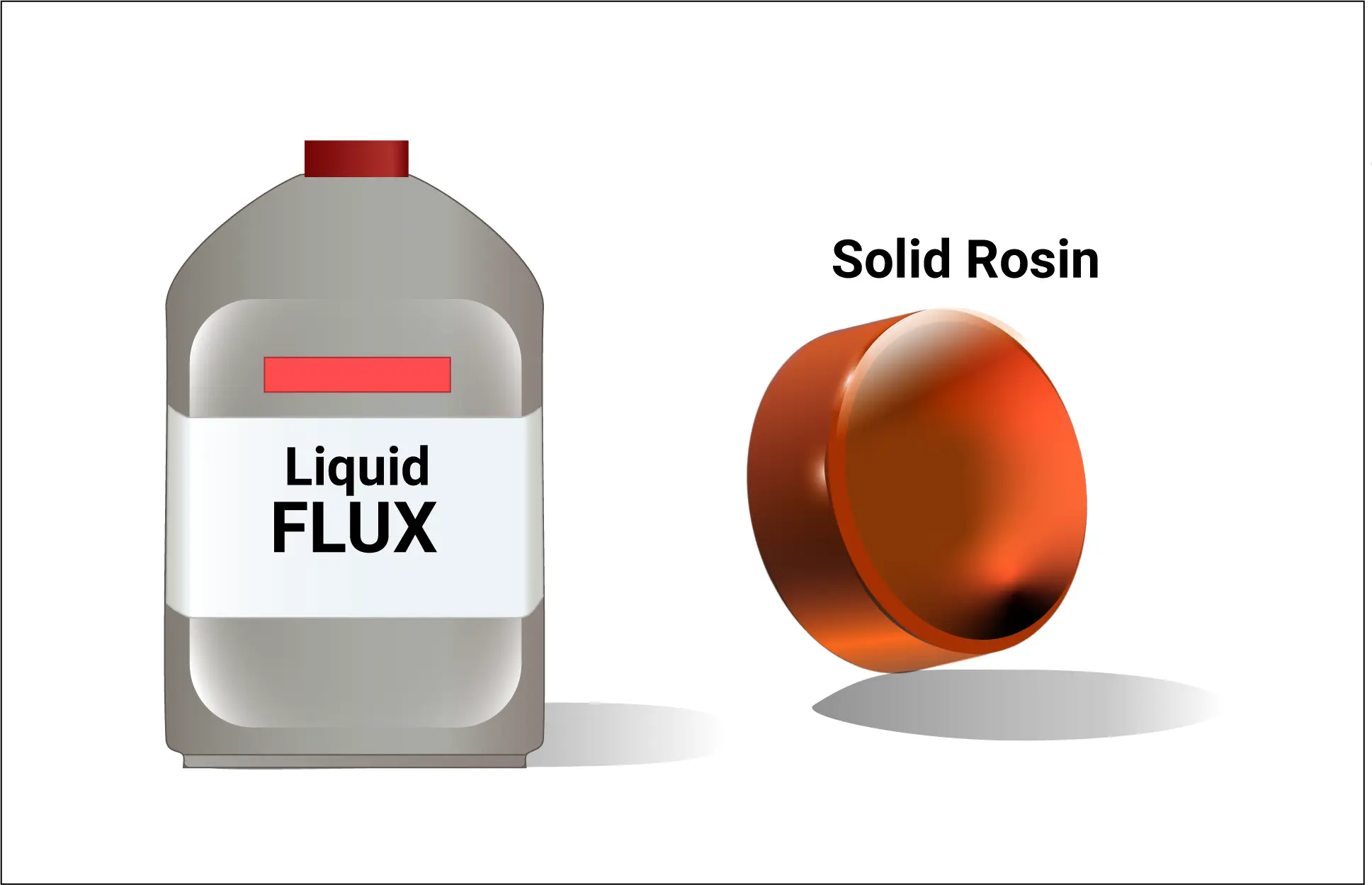
Soldering fluxes are categorized based on their composition and activity to distinguish different formulations and their characteristics.
The eBook uses J-STD-004 to classify fluxes into four main categories: rosin (RO), resin (RE), organic (OR), and inorganic (IN).
These categories are further classified based on factors such as flux activity and halide content.
Instead of treating all flux as the same material, classification provides a structured way to understand the differences between formulations. This is especially important because manufacturers offer numerous flux products. Product names alone do not necessarily provide enough information to determine which formulation is appropriate.
Understanding the category of a flux provides an additional basis for comparing products. It also helps you interpret manufacturer information more effectively because technical specifications can be considered in the context of the flux category.
Why does flux classification matter?
Flux classification gives engineers and manufacturing professionals a systematic way to evaluate flux formulations.
A classification provides information about characteristics that can influence soldering performance and the suitability of the flux for a particular application.
Without a clear understanding of classification, comparing flux products can become difficult. Two products may both be described as soldering fluxes while having substantially different characteristics and intended uses.
It also helps establish a common framework for understanding these differences. Classification provides a starting point for evaluating technical data. Instead of looking at individual specifications in isolation, you can consider how the formulation classification relates to its intended application.
This is particularly useful when selecting flux for production because the objective is not simply to find a flux that works during soldering. The formulation must also be appropriate for the requirements of the complete application.
How do you read a flux manufacturer’s technical data?
Start by identifying the flux classification and understanding what its activity, halide content, and other listed characteristics mean for the intended application.
Flux manufacturers use proprietary formulations, so the complete composition may not always be disclosed. Instead, technical data and classification provide important information about the characteristics of the formulation.
When reviewing the data, pay attention to the flux classification, activity level, halide content, and information about its intended application. Activity classifications are based on the conductivity and corrosivity of flux residues after soldering, while halide content is also reflected in the classification.
Technical data should not be viewed as a collection of unrelated numbers. Each characteristic contributes to the overall behavior of the flux.
For example, information about the flux ingredients provides insight into what the formulation is designed to do. Classification provides a way to categorize the formulation. Application information helps establish where the product is intended to be used.
Together, these details provide a more complete picture of the flux.
What should you look for when evaluating flux technical data?
When evaluating flux technical data, look at its composition, classification, activity, halide content, residue characteristics, and intended application. Considering these characteristics together provides a better basis for comparing fluxes and determining their suitability.
Flux composition
Understanding the primary ingredients provides insight into how the flux functions. Acids, solids, and solvents perform different roles, so their presence and characteristics contribute to overall flux behavior.
Flux category
The category provides a framework for understanding the formulation and comparing it with other fluxes.
Activity
Activity relates to the ability of the flux to address oxide formation and support soldering. The required activity depends on the application and the surfaces being soldered.
Residue characteristics
The condition and characteristics of flux residues after soldering are important considerations when selecting a formulation. The requirements of the finished assembly should influence the choice.
Application requirements
Evaluate the flux in the context of the soldering application. The appropriate flux depends on factors such as the surfaces being soldered and the required reliability of the assembly. There is no single flux that is ideal for every application.
How do you choose the best flux for an application?
Choosing the right flux starts with understanding the requirements of the application. There is no reason to select a flux based only on its popularity or availability. The appropriate formulation depends on what the soldering process requires.
Start by considering the surfaces being soldered and the oxide-removal capability required. The flux must be strong enough to remove the oxides present within the time available for soldering. Using a flux that is too weak can increase the risk of solderability defects, while excessive flux strength can increase reliability risks from ionic and corrosive residues.
Next, consider the soldering process itself. The flux needs to function effectively within the conditions of that process. The characteristics of the finished assembly are equally important. The flux should provide the required soldering performance while meeting the requirements associated with the completed assembly. This creates a selection process based on requirements rather than assumptions.
A practical approach is to:
- Identify the surfaces being soldered and their oxide-removal requirements.
- Determine the flux activity needed for reliable soldering.
- Select a flux qualified to J-STD-004B.
- Review the manufacturer’s technical data and flux classification.
- Consider the potential conductivity and corrosivity of the residues.
- Select the strongest flux that can be demonstrated to meet the soldering and reliability requirements.
- Thoroughly validate any new or stronger flux before adopting it.
This approach makes flux selection more systematic and reduces dependence on trial and error.
How can you compare different flux formulations?
Manufacturers offer many flux formulations, and the differences between them are not always obvious. A useful comparison starts by putting the formulations on the same basis.
First, identify the category of each flux. Then examine the available technical information and determine how the formulations differ in their characteristics. Consider whether each formulation provides the required oxide-removal capability and whether its other characteristics are appropriate for the application.
The goal is not to identify a universally superior flux. Instead, the goal is to identify the formulation that provides the characteristics required by the specific soldering process. This approach makes flux selection more objective and provides a clearer basis for communicating requirements between engineering, manufacturing, and suppliers.
What makes a flux suitable for different applications?
Different soldering applications can place different demands on flux. The surface condition, soldering process, and requirements of the finished assembly all influence flux selection. A formulation that provides sufficient activity for one application may not be appropriate for another. Similarly, the characteristics required after soldering may influence which formulation is selected. This makes application-specific selection important. Instead of asking, “Which flux is the best?” a more useful question is, “Which flux provides the characteristics required by this application?”
Answering that question requires an understanding of flux ingredients, categories, technical data, and application requirements. Once these factors are understood, you can compare available formulations and make a selection based on the actual needs of the soldering process.
Soldering flux is an essential part of the soldering process, but choosing the right formulation requires more than knowing that flux removes oxides. You need to understand why flux is needed, what its ingredients do, how fluxes are categorized, how to interpret manufacturer technical information, and how application requirements influence the final selection.
Download the Soldering Flux eBook to understand the fundamentals of flux and make more informed decisions about flux selection and usage in your soldering process.