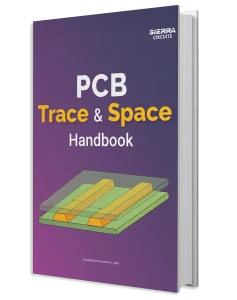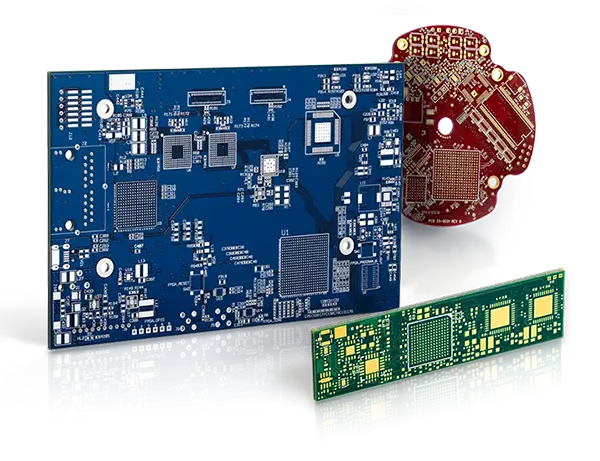

PCB Trace and Space Handbook
Sierra Circuits’ Trace and Space Handbook provides guidelines for designing traces with consistent impedance and reduced EMI.


Sierra Circuits’ Trace and Space Handbook provides the practical guidelines for setting line widths and clearances in PCB designs. Following these rules helps you maintain signal integrity, ensure manufacturability, and stay compliant with industry standards.
This eBook breaks down how factors like current requirements, target impedance, and copper weight impact your choices for line width and clearance.
The guide also covers the key aspects of high-speed trace design. It explains how to achieve consistent impedance, reduce EMI, and create traces that handle current safely. You’ll also learn how to improve heat dissipation and reliability by considering etching tolerances.
It goes further into board edge-to-copper spacing, pad-to-pad distances, creepage and clearance for high-voltage circuits, and spacing rules to minimize crosstalk in high-speed designs.
It includes a section on designing heavy copper boards, covering DFM strategies to ensure reliability and manufacturability.
The Trace and Space Handbook summarizes key standards such as IPC-2221, IPC-2152, and IPC-6012 that help you stay aligned with industry benchmarks and avoid costly redesigns.
What’s inside:
- Key factors influencing line width and spacing
- Clearance guidelines for high-voltage and high-speed traces
- DFM rules for heavy copper PCBs
- Via considerations
- Industry standards for trace and space design