
Key IPC Standards Every PCB Designer Should Know

Vandana CC
Engineering Project Coordinator
Sierra Circuits
When you begin your journey as a circuit board designer, understanding IPC standards is not optional; it’s foundational. These standards act as a common language between designers and fabricators, ensuring your design intent is accurately translated into a manufacturable product.
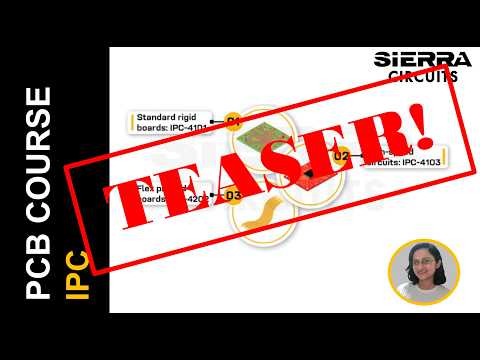
In this webinar, you will learn how key IPC standards for PCB design help you improve product reliability.
Importance of IPC regulations for creating reliable PCB prototypes
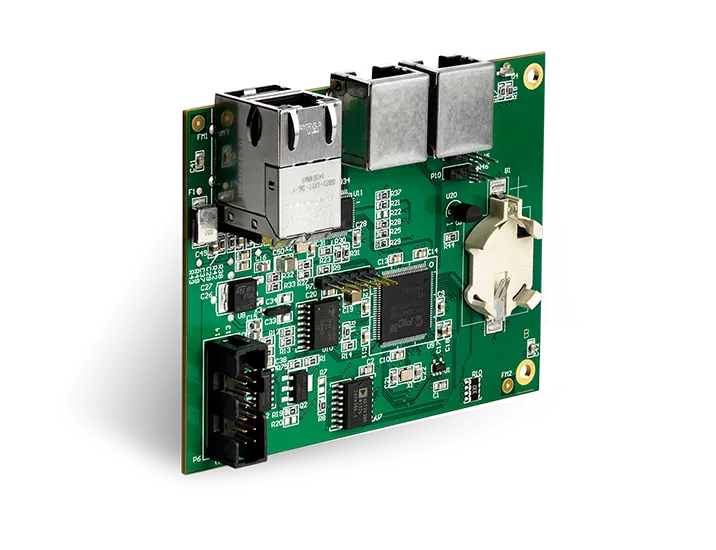
To begin with, material selection plays a critical role in improving overall performance. Standards such as IPC-4101 (rigid boards) and IPC-4103 (high-speed applications) help you choose the right laminates for signal integrity, thermal stability, and manufacturability.
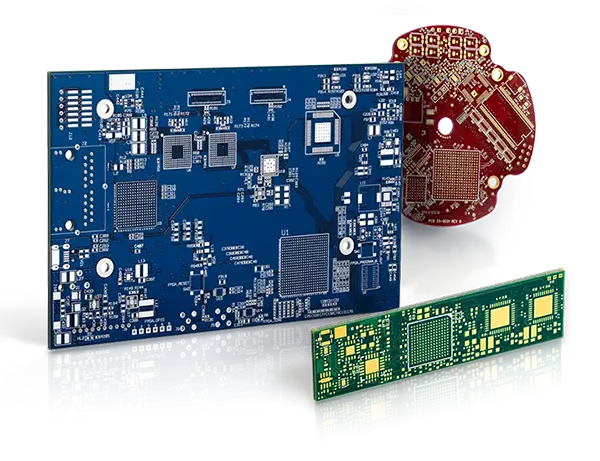
Once laminates are defined, the focus shifts to layout design. At this stage, IPC-2221 provides guidelines for trace widths, spacing, and creepage distances to ensure electrical safety. For more specific design requirements, follow IPC-2222 for rigid, IPC-2226 for HDI, and IPC-2223 for flex and rigid-flex boards. In addition, IPC-2152 helps you accurately calculate current-carrying capacity for reliable thermal performance.
After completing the layout, the next step is to ensure your design is manufacturable. Even a well-routed PCB can fail if it does not align with fabrication capabilities.
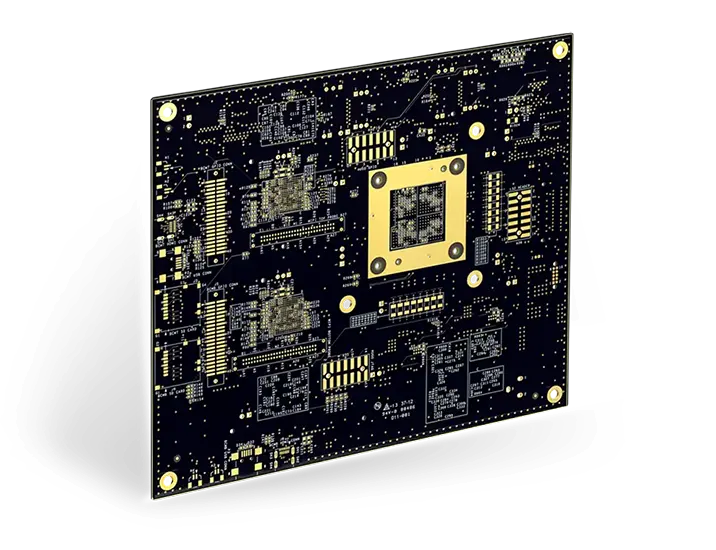
Standards such as IPC-6012 (rigid PCBs), IPC-6013 (flex circuits), and IPC-6018 (RF and high-frequency boards) define performance requirements, tolerances, and acceptance criteria to improve fabrication success.
Following fabrication, your design moves into assembly. IPC-7351 guides you in land pattern design, and IPC J-STD-001 defines soldering requirements to help you avoid tombstoning, solder bridges, and insufficient joints.
Testing and quality assurance are essential to validate performance under real-world conditions. IPC-A-600 specifies bare board acceptability criteria, while IPC-TM-650 provides standardized test methods.
Equally important is how you communicate your design requirements to your CM. IPC-2581 enables seamless data exchange between design and manufacturing. In addition, IPC-D-356 guarantees precise verification of the netlist.
By the end of this webinar, you will have a clear understanding of essential IPC standards for PCB design, including IPC-2221, IPC-2152, IPC-6012, IPC-A-600, IPC-A-610, and IPC-2581.
You will gain the confidence to make the right design decisions and deliver high-quality, manufacturable circuit boards.
What you’ll learn:
- What every PCB designer must know about IPC standards
- Avoiding expensive design mistakes caused by IPC misinterpretation
- Why accurate documentation can make or break your board
- Essential IPC standards you can’t ignore at the design stage
About Vandana CC
Engineering Project Coordinator at Sierra Circuits
With a strong foundation in physics, Vandana CC brings a deep technical understanding to her work in PCB design and electronics manufacturing. She holds a Master’s in Physics and has experience teaching before transitioning into research at the Indian Institute of Science.
At Sierra Circuits, Vandana has played a key role in R&D projects, contributing to the development of engineering tools and calculators, technical content creation, and customer demos. Currently, she focuses on project coordination, ensuring seamless collaboration both within the team and with external partners. Her expertise bridges the gap between technical innovation and practical application, making her an integral part of Sierra Circuits’ engineering efforts.
Watch the Trailer